GRADUATE VOICE
 Twitter
 Facebook
 Google+
 LinkedIn
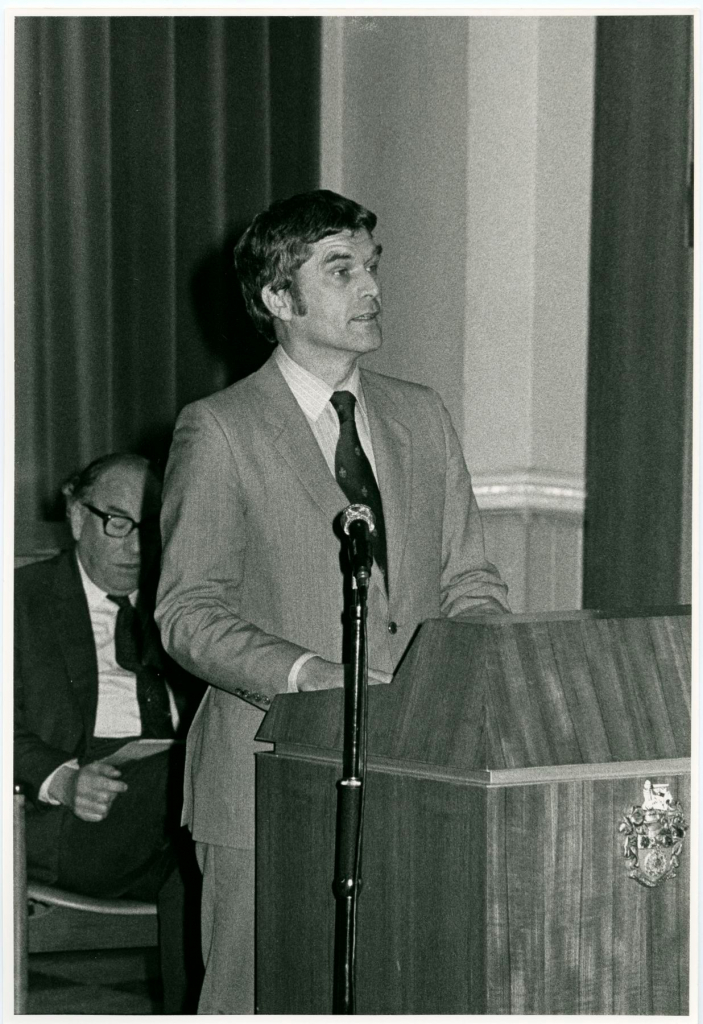
Earlier this year, we were saddened to hear the news that Professor Sir John Ashworth, former Vice-Chancellor of the University, passed away on 3 March 2025 at the age of 86.
Sir John led the University from 1981 to 1990, arriving during one of the most challenging periods in UK higher education. He took up the role shortly after a Conservative government, led by Prime Minister Margaret Thatcher, announced unprecedented funding cuts to universities. In 1981, the University Grants Committee revealed that Salford faced a 44% reduction in funding and would need to reduce student numbers, creating a potential deficit of £6.5 million and low staff morale.
Despite this, Sir John provided steady, visionary leadership. Under his stewardship, Salford became less dependent on government funding and forged closer links with industry. Initiatives included CAMPUS, a supporters’ club connecting the University with corporate and industry partners, the development of the Industrial Centre, and new research grants. By 1984–85, 30% of the University’s income came from external sources—a major increase from 16% in 1981—helping reduce the projected deficit of over £8 million to just £256,000.
Cost-saving measures included an early retirement scheme, course reductions, and the demolition of the Chemistry Tower. New developments included the Information Technology Institute, opened by Margaret Thatcher in 1988, the Advanced Robotics Research Centre, and Salford University Business Services, which became the largest university consultancy company in the country. The University also pioneered ‘Integrated Chairs,’ allowing academics to split their time between the University and industry partners, further strengthening ties with the external world.
Before joining Salford, Sir John had already built a distinguished scientific and public service career. He completed his PhD in Biochemistry at Leicester University and became known for his pioneering research in cell biology. In 1976, he joined the UK Cabinet Office as Chief Scientific Adviser and later served as an undersecretary.
Following his time at Salford, Sir John became Director of the London School of Economics, continuing to champion academic excellence. He later served in senior roles at the British Library, the Institute of Cancer Research, Barts and the London NHS Trust, and as President of the Council for Assisting Refugee Academics.
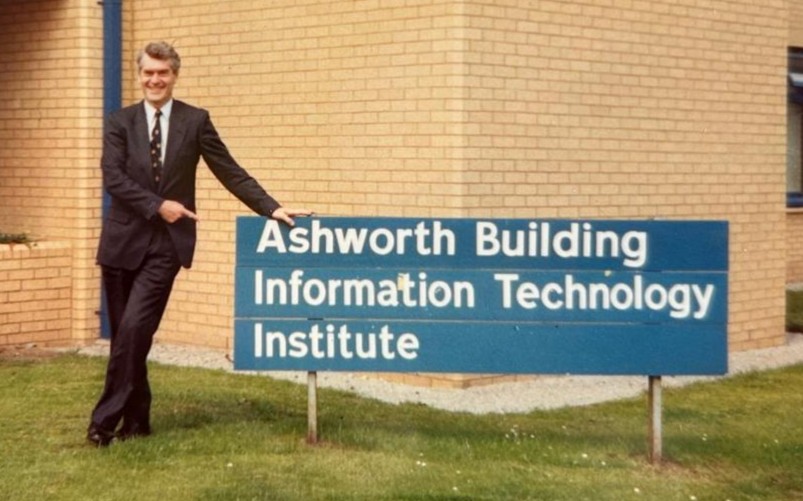
Sir John never lost his affection for Salford. In 1991, he returned to visit the Ashworth Building, named in his honour. His daughter Emily recalled, “Dad had a huge fondness for Salford University. He always talked about it with great affection.”
Outside of work, he was deeply involved in his local community of Wivenhoe and remained passionate about sailing throughout his life. Sir John was knighted in 2008 for his outstanding public service. He is remembered as a thoughtful leader, a supportive mentor, and someone who truly believed in the power of education to change lives. His legacy at Salford will be felt for generations to come.
STUDENT ACTIVISM DURING A TIME OF AUSTERITY
The severe funding cuts of the early 1980s did not go unchallenged. Salford students were deeply affected, and they responded with organised activism that reflected both concern for their education and solidarity with staff. In a leaflet titled Towards a New University, the Students’ Union endorsed “Choice 3,” supporting closer engagement with industry and external funding—showing a pragmatic recognition of the University’s financial pressures.
Salford students also led the way for protest across the North-West. On 17 October 1981, a March for Education set off from Irwell Place car park, drawing students alongside prominent trade union figures including Arthur Scargill, local MP Frank Allum, and Neil Kinnock. The demonstration highlighted the widespread opposition to cuts and the potential impact on academic jobs and opportunities.
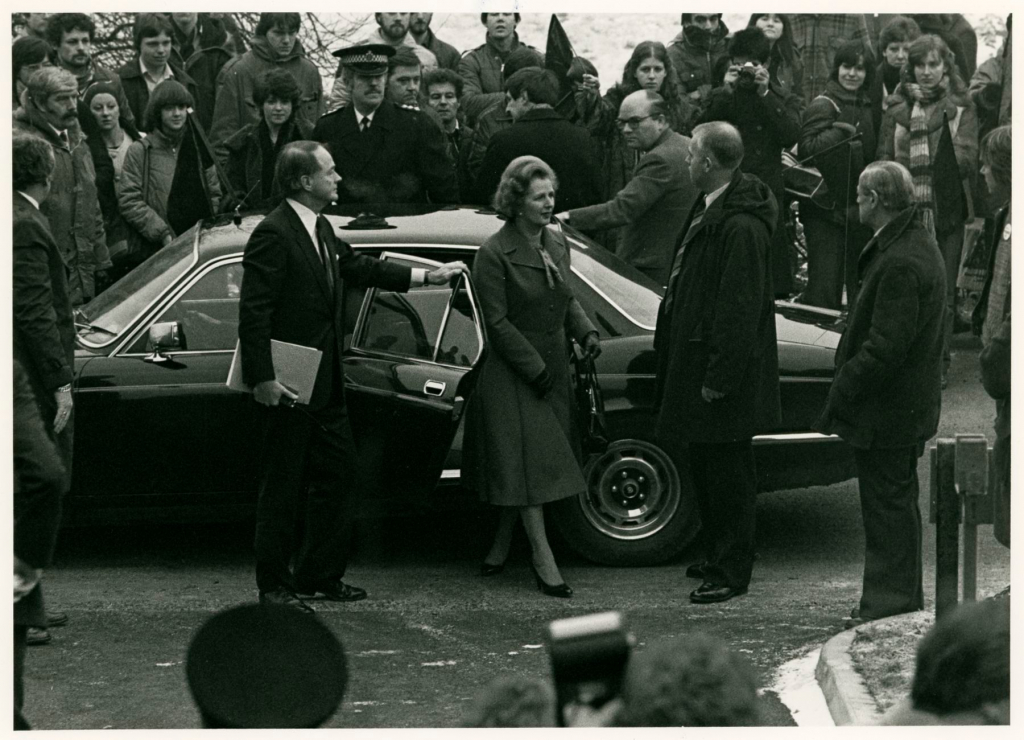
Perhaps the most striking moment came on 15 January 1982, when Prime Minister Margaret Thatcher visited the University to open the Industrial Centre. Around 300 students staged a silent vigil, dressed in black, carrying black flags and a coffin. They reportedly turned their backs as the Prime Minister emerged, a “vigil of mourning” for what the Students’ Union described as the “imminent death of Salford University, of higher education, of educational opportunities and of thousands of jobs.” The protest remains a powerful symbol of student engagement and the high stakes faced by the University community during this challenging period.