At the University of Salford, we empower and equip our students to take action to support sustainability during their studies and when applying their knowledge long after graduation. For Lauren Moore, a BSc (Hons) Wildlife Conservation with Zoo Biology graduate, that approach became the foundation of a career dedicated to protecting biodiversity and promoting sustainability across communities and organisations worldwide.
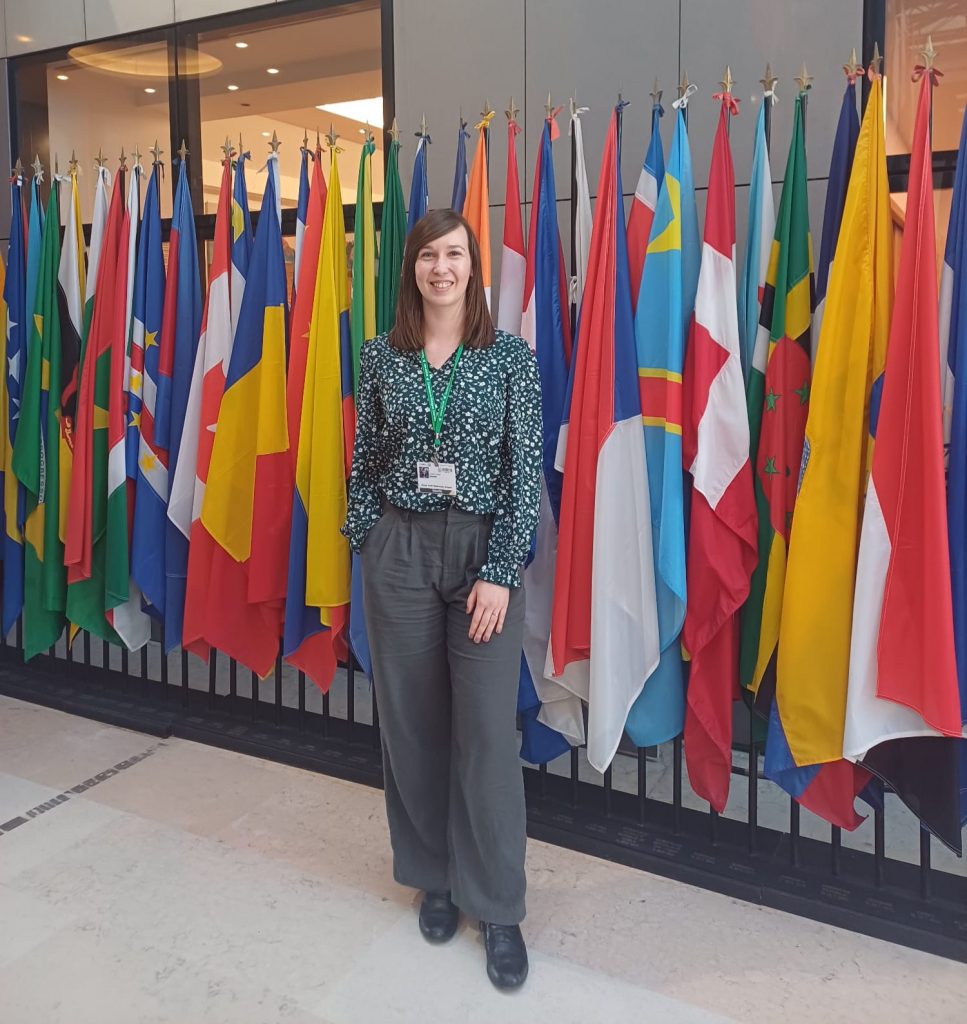
Today, Lauren is the Science and Research Coordinator at the Durrell Wildlife Conservation Trust, where she helps design, manage, and evaluate projects that protect species and ecosystems around the world. Her work blends research, policy, and collaboration, bringing together scientists, NGOs, and governments to drive conservation that’s both evidence-based and equitable.
“My role combines everything I’ve learned along the way, from scientific research to stakeholder engagement and communication,” Lauren explains. “It’s about connecting people with nature and ensuring conservation supports both biodiversity and communities.”
A Foundation in Sustainability at Salford
Lauren’s time at Salford set the stage for everything that followed. The Wildlife Conservation with Zoo Biology course gave her a deep understanding of ecological systems, species management, and the human dimensions of sustainability.
“What really stood out was how integrated sustainability was across every module,” she recalls. “We didn’t just talk about wildlife in isolation; we explored how conservation fits within broader issues like climate change, social development, and ethics.”
Modules in Conservation Biology and Frontiers in Science gave her the analytical and practical skills to navigate the complexities of modern conservation. Salford’s emphasis on applied learning, from fieldwork and lab work to research and volunteering, taught her how to link science with solutions.
Learning Beyond the Lecture Hall
Lauren immersed herself in sustainability both in and out of the classroom. As Co-Chairperson of the Rambling Society and later Chairperson of the Wildlife Society, she used her leadership roles to promote low-impact travel, responsible fieldwork, and accessible outdoor experiences.
She also took part in the University’s Green Impact programme, working with the library team to improve recycling, reduce energy use, and embed sustainable practices across campus operations. That project, which earned her the Green Impact Student Leadership Award, introduced her to sustainability in a workplace setting.
“It was my first real experience of change management,” she explains. “We were finding practical ways to make a difference, and it showed me that sustainability can start anywhere, even with small changes in how an office runs.”
Lauren also earned the Salford Gold Award, which recognised her commitment to extracurricular and community engagement, and she credits this blend of academic and practical experience as “transformational” in building her early confidence.
From Wildlife to Policy — and Back Again
After Salford, Lauren pursued a Master’s in Biodiversity, Conservation and Management at the University of Oxford, where she honed her understanding of conservation planning and policy. Her master’s research focused on human-wildlife coexistence, exploring how local communities can thrive alongside conservation initiatives.
Her early professional journey began as an Ecological Consultant, conducting biodiversity surveys, habitat assessments, and environmental impact studies. This role gave her valuable insight into the interface between development, conservation, and policy.
“Consultancy taught me how conservation decisions are made in the real world, balancing ecological needs with business priorities and regulation,” she says.
Lauren then joined the Royal Society for the Protection of Birds (RSPB), where she worked on fundraising and communication projects that supported habitat restoration, endangered species recovery, and nature education programmes across the UK. Her work there helped mobilise public and corporate support for large-scale sustainability initiatives.
“At RSPB, I saw how storytelling can drive change,” she reflects. “It’s not enough to have good science; you need to help people care about it.”
Her growing interest in advocacy led her to Wildlife and Countryside Link, the England’s largest nature coalition, which brings together over 90 environmental NGOs, including WWF, the Wildlife Trusts, the National Trust, and Friends of the Earth.
At Link, Lauren coordinated eight specialist working groups covering topics such as climate change, education, access to nature, and species protection. She was responsible for facilitating collaboration, writing joint policy briefings, and engaging with government departments to influence national environmental strategy.
“Working with Link really opened my eyes to how policy and science come together,” she explains. “I got to see how evidence shapes legislation, and how collaboration between organisations can amplify impact.
Science, Sustainability, and Global Impact
Now at Durrell Wildlife Conservation Trust, Lauren combines all those experiences in one role. Durrell’s mission, “saving species from extinction”, aligns perfectly with her values. Her work supports conservation projects from Madagascar and the Caribbean to the Indian Ocean and Southeast Asia, focusing on species recovery, ecosystem restoration, and sustainable community engagement.
“Durrell’s approach is holistic,” she says. “We’re not just protecting species; we’re building resilience in the ecosystems and communities that depend on them.”
Her work spans everything from supporting community-led reforestation in Madagascar to advising on low-impact field logistics in the Caribbean.
“One day I might be working on data management frameworks for endangered species, and the next day, teaching students around the world and supporting field teams to monitor effectiveness of initiatives,” she adds. “It’s a constant balance of science, logistics, and people.”
Championing Everyday Sustainability
Lauren’s sustainability journey extends beyond the workplace. She embraces low-carbon travel and shops second-hand, small daily actions that align with her professional ethos.
“Sustainability isn’t about being perfect,” she says. “It’s about consistency. Every choice adds up, from the way you commute to how you spend your money.”
Her volunteering continues, too. She’s actively involved in community networks and serves as a Trustee of the Nottinghamshire Wildlife Trust, where she contributes to strategic planning and governance, helping the organisation align its mission with broader sustainability goals.
Advice for Future Changemakers
Lauren encourages current students and young professionals to see sustainability as a skill set, something that applies across all disciplines, not just environmental sciences.
“Take every opportunity you can, even if it feels small,” she advises. “Volunteer, join societies, attend events, talk to people working in the field. Those experiences build confidence and perspective.”
She also emphasises the importance of making sustainability personal:
“Find your connection to it,” she says. “If you love sport, fashion, or tech, explore how sustainability fits there. That’s how you make it meaningful and lasting.”
Full Circle: From Salford Values to Global Vision
Reflecting on her journey, Lauren credits her time at Salford as the foundation of her career. The University’s emphasis on applied learning, community, and environmental awareness instilled not just knowledge, but a sense of purpose.
“Salford taught me that sustainability isn’t just about protecting nature, it’s about protecting people, too,” she says. “That holistic view has stayed with me in every role I’ve taken.”
She often finds herself drawing on lessons from her undergraduate days, whether she’s coordinating international conservation projects, advising NGOs, or mentoring young professionals. For Lauren, coming full circle means using her education to empower others, from students and colleagues to communities around the world, to make sustainability central to what they do.
“Salford gave me the belief that change is possible,” she says. “Now I get to play a small part in helping others make that change happen.”
At the University of Salford, we’re proud to see alumni like Lauren Moore turning knowledge into impact, proving that sustainability isn’t just a subject, but a lifelong commitment to building a better future for people and planet alike.