Written by Zoe Pegg, Environmental Management Assistant
The plastic issue is a complicated one, and the answer is not as simple as plastic being bad. If plastic products are made to last, are reused repeatedly, and recycled at the end of their use, they can be a long-lasting, sustainable option.
The biggest problem is our prolific use of avoidable and single-use plastics. Things such as drinking straws, plastic wrapping, disposable coffee cups, water bottles or takeaway boxes are often used for mere minutes before being thrown away. A vast amount of energy and resources are used in the lifecycle of these products, during production, transport emissions, and disposal.

In the UK alone, 7 million disposable coffee cups are used every single day and end up in general waste which (depending on where you live) goes to landfill or ‘energy from waste’ factories. Both of these options release greenhouse gases, contributing to climate change. A common misconception is that coffee cups are recyclable, but due to the plastic lining inside, they cannot be recycled in standard collections at home or on university campus. Lots of people ‘wish cycle’ disposable coffee cups which means they want to do the right thing and recycle however instead accidentally contaminate the recycling bin which can result in all the correct material being sorted into general waste at the factory.
The Sustainability Team are working to reduce our reliance on plastic by supporting our departments, community partners and local businesses to identify and remove plastic products. As part of our plastic free campaign, we’ll be sharing success stories, and helpful tips, in our newsletter, which you can sign up to here.
If you’re looking for some tips to reduce your plastic use, then here are some ideas to help you, help the planet.
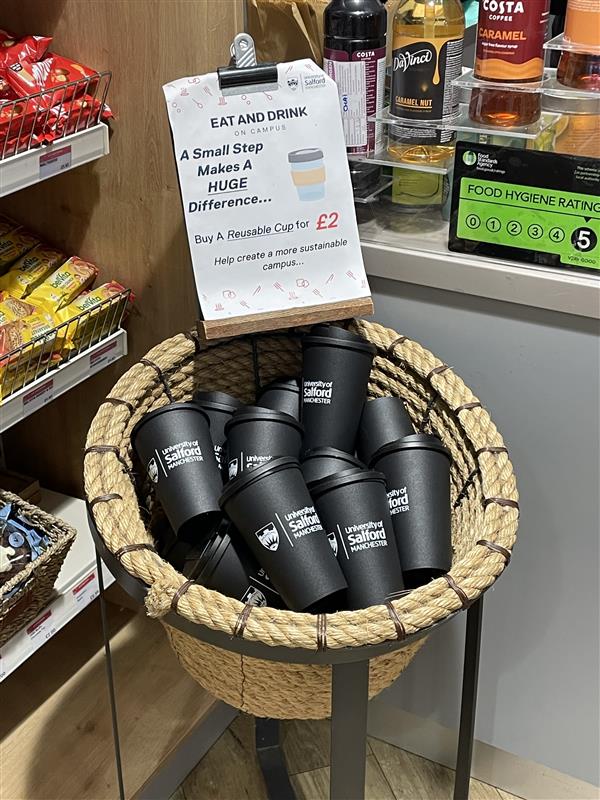
- An oldie but a goodie – using a reusable coffee cup! We sell our own branded cups for just £2 at our campus outlets AND when you bring your own you avoid a 20p charge, so in 10 uses, you’ve already saved more than using disposable ones! The 20p disposable cup charge is being collected and invested to support sustainable projects on campus – what’s not to love!
- Saving waste on campus– Maxwell canteen now has crockery you can use if you choose to sit in. If you need to take away, why not take your own reusable container to canteens, our kitchen staff will be happy to serve you food in your own box.
- If you’re interested in plastic free groceries – the Deli Llama café and shop in Islington Mill may be the place for you! Just a 10-minute walk from Peel Park campus, you can find all your essentials such as pasta, rice or beans, as well as nuts, seeds, spices and organic veg. By refilling containers, you can save plastic waste in your weekly shop!
- In the supermarket – Try to buy fruit and veg loose. Not only does this save plastic but it can help reduce food waste as you only buy what you need.
- Soap savings – Soap bars are a great alternative to bottled hand soap, and they often last longer too. Using them in the shower can double the savings as you don’t need to buy a sponge or loofah.
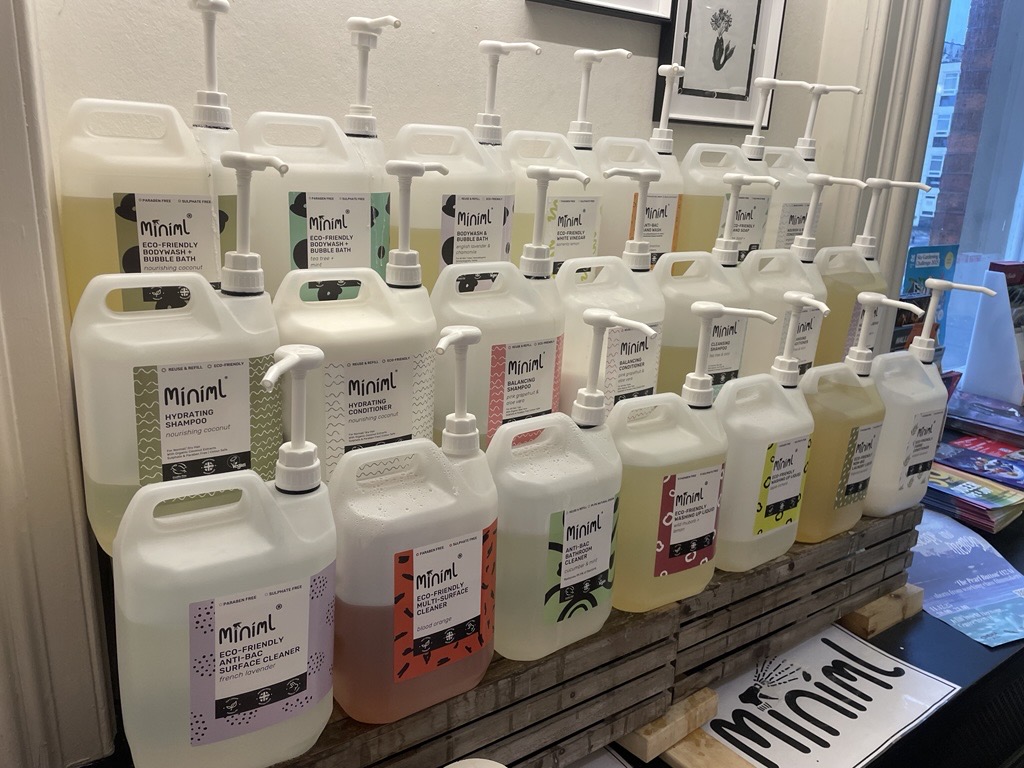
- Choose to refill – The Salford Museum & Art Gallery run a refill shop for products such as laundry detergent, hand & bodywash and even bubble bath. There’s a great range available, you can pop in with your own 500ml container or buy one there.
- Washing wonders – Standard dish sponges are a type of plastic and shed micro-plastics into the water in every use. Try switching to a bristled brush or cloth which have the bonus of lasting far longer.
- Something to consider at work – Does your team get deliveries shrink-wrapped? Consider getting in touch with the supplier to remove the plastic wrap and use something recyclable. Read this inspiring example from the Art Collection Team about how they convinced their supplier to make companywide changes to reduce single use plastics.

We hope these are some good starting points to get you involved and inspired to reduce plastic – perhaps you’re already doing some of them! We recognise it can be hard to be reduce waste when single-use items are the norm, and some actions are easier and more accessible than others. You can find out more and get your team involved in our Plastic Free Community through our webpage.
If you have any questions, ideas for opportunities, or want to talk to the Sustainability Team about how to reduce single use plastics at the University, then you can get in touch at sustainability@salford.ac.uk. If you’re looking to find other plastic free passionate people, our Green Campus Group Teams group, is a space where staff and students can share ideas and suggestions of their own.