Salford, both city and university, have long been impacted by socioeconomic and cultural change.
The city’s roots are firmly embedded in the first and second Industrial Revolution with development occurring through a continual processes of adaptation, innovation and renewal. During the middle of the eighteenth century, Salford was still a relatively small place to live. Then, came rapid industrialisation transforming the landscape, driving population growth and needs to restructure the urban environment. By the late nineteenth and early twentieth century, the city became what historian Asa Briggs later described as a “shock city” – a place affected by rapid social, economic, and technological transformation.
As industrial expansion began to stabilise, educational institutions sprang up to meet new demands for technical skills and professional training. The Pendleton Mechanics’ Institute was established 1850, and the Salford Working Men’s College in 1858. When they both merged in 1896, the Royal Technical Institute, Salford was created. The institution became the Royal Technical College in 1921, before undergoing a major transition in 1956 to become the Royal College of Advanced Technology, Salford.
But what exactly was a College of Advanced Technology, or as they were commonly referred to: CATs? In simple terms, these institutions were identified by the government following the White Paper on Technical Education (1956). The report recognised gaps in Britain’s higher education sector, particularly science and technology, and aimed to accelerate the development of institutions capable of addressing national skills shortages. Selected colleges were tasked with expanding advanced courses, strengthening links with industry, and contributing to economic modernisation. While twenty-four institutions were initially considered, ten were ultimately designated to Colleges of Advanced Technology. These developments formed part of a broader post-war effort to expand higher education and strengthen the national economy through scientific research and technological innovation. Earlier recommendations from the Percy Report (1945), the Barlow Committee on Scientific Manpower (1946), and the National Advisory Council (1952), had already highlighted the need to increase the number of scientists and technologists. By the mid-1950s, student numbers in science and technology had doubled compared with pre-war levels, and further growth was actively encouraged through new funding structures, full-time and sandwich courses, and the introduction of the Diploma in Technology.
Salford’s designation as a College of Advanced Technology was announced in the House of Commons on 21 June 1956, with formal recognition confirmed on 2 November that year. Salford joined a newly created network of educational providers who were positioned at the forefront of Britain’s technological education strategy. A defining moment in Salford’s transformation, the White Paper set the course towards becoming a technological university. By 1961, the college operated in a contemporary building, the Maxwell Building, and in 1967, received the Royal Charter to become a Civic University.


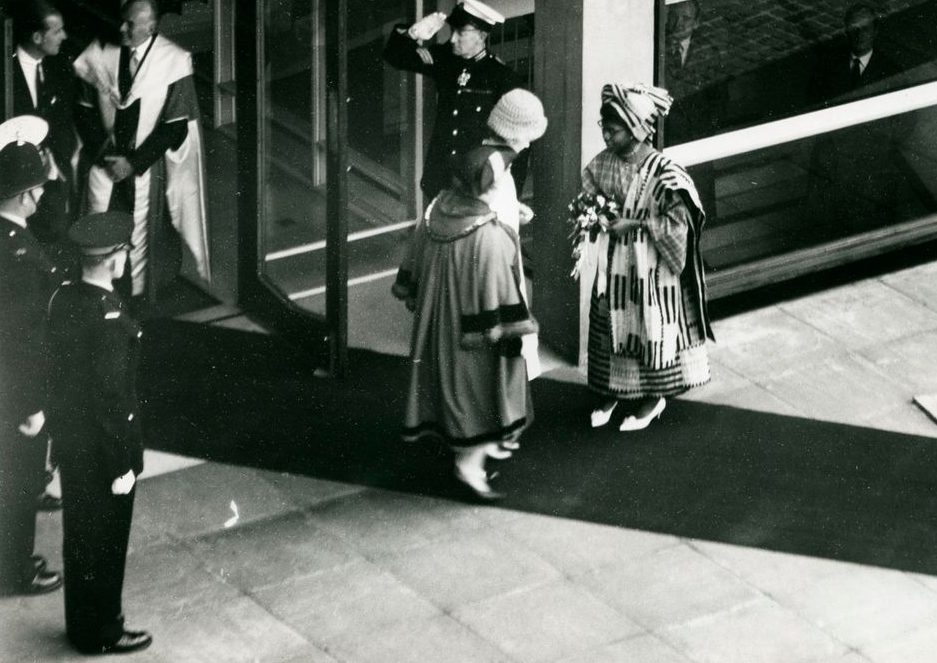
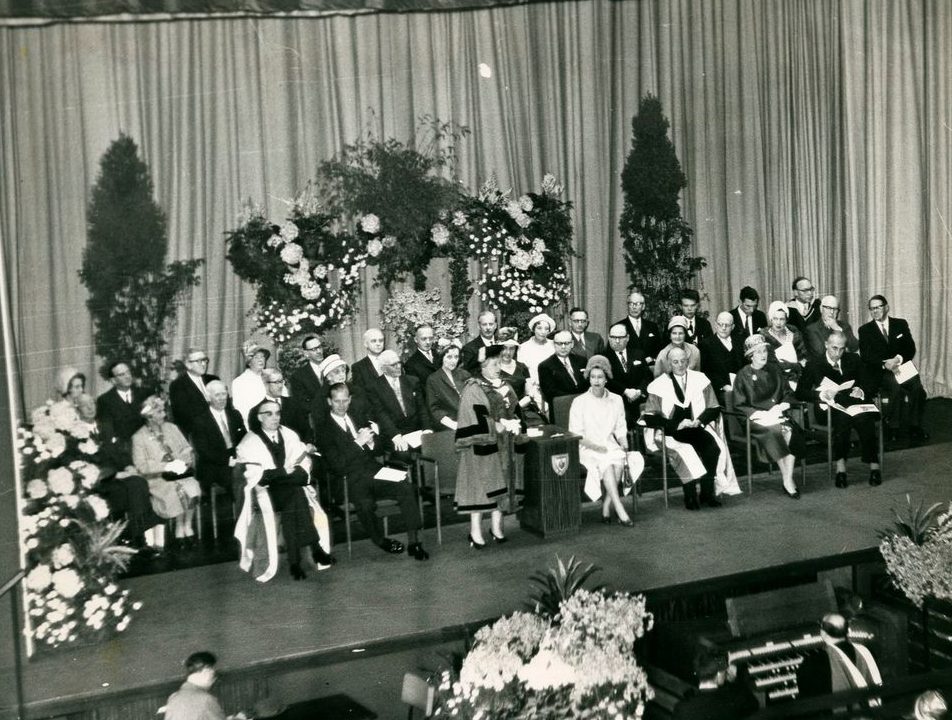
Visit of the Queen to the Royal College of Advanced Technology, 1961.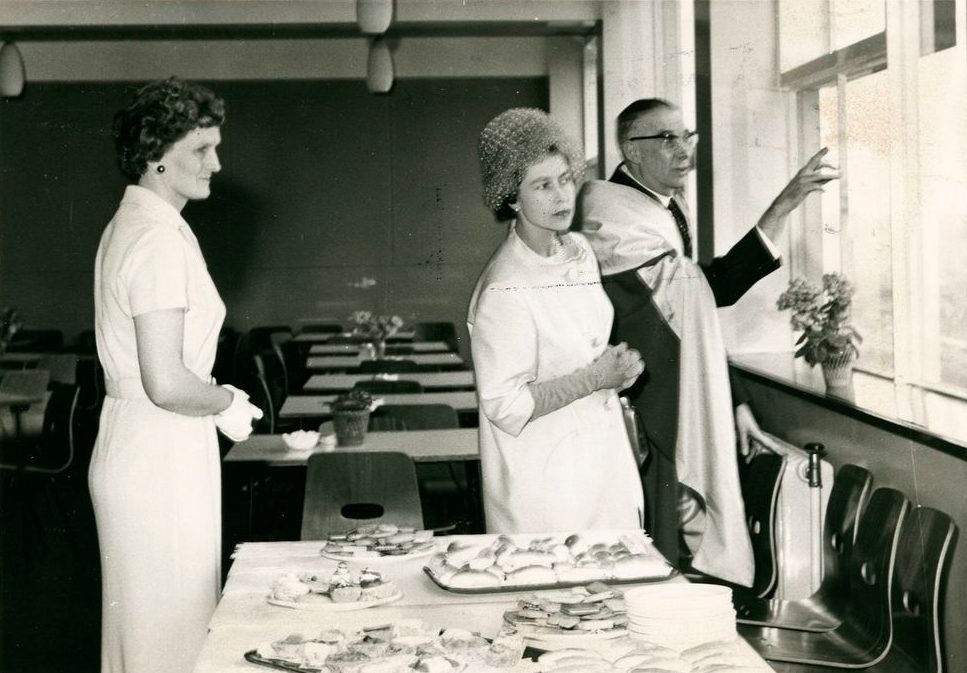
[…] Salford based in the newly constructed Maxwell Building. The creation of the Royal College marked a turning point in the history of the institution as one of ten colleges nationally that gained elevated status and […]
[…] College after it moved from the Peel Building when the institution split to become the Royal College of Advanced Technology in 1958, which took over the Maxwell Building, becoming the University of Salford in […]
[…] analysis does not include Salford or the other Colleges of Advanced Technology accelerated to university status. He was aware of them, “ten CATs, restricted to awarding […]
[…] “new universities were to be supplemented by the making up to university levels of nine Colleges of Advanced Technology“. Plateglass institutions had a clean slate to innovate, the Technical Colleges less so. New […]
[…] Advanced Technology, Salford, based in the newly constructed Maxwell Building. The creation of an advanced college was part of ten national colleges that gained elevated status and were approved to award degree […]