Let’s salute some of Salford’s modernist heroes.
To clarify, there’s no hierarchy or pecking order implied in the individuals discussed here. Each is included because their work provides context to a particular place and time, helping frame wider cultural and social shifts across Salford during periods of economic and urban change. These are figures whose work I admire for integrity and close engagement with lived experience. A useful starting point for understanding had been found in University prospectus guides produced between 1900 and 1960. These documents demonstrate how the institution responded to local industrial needs, offering courses in areas such as stone masonry, coal-tar chemistry, weaving, cotton manufacturing, and dyeing and bleaching. Over time, these programmes evolved to include building, civil engineering, telecommunications, gas fitting, and eventually nuclear technology. Literary and cultural responses to Salford’s changing landscape emerged alongside these developments.
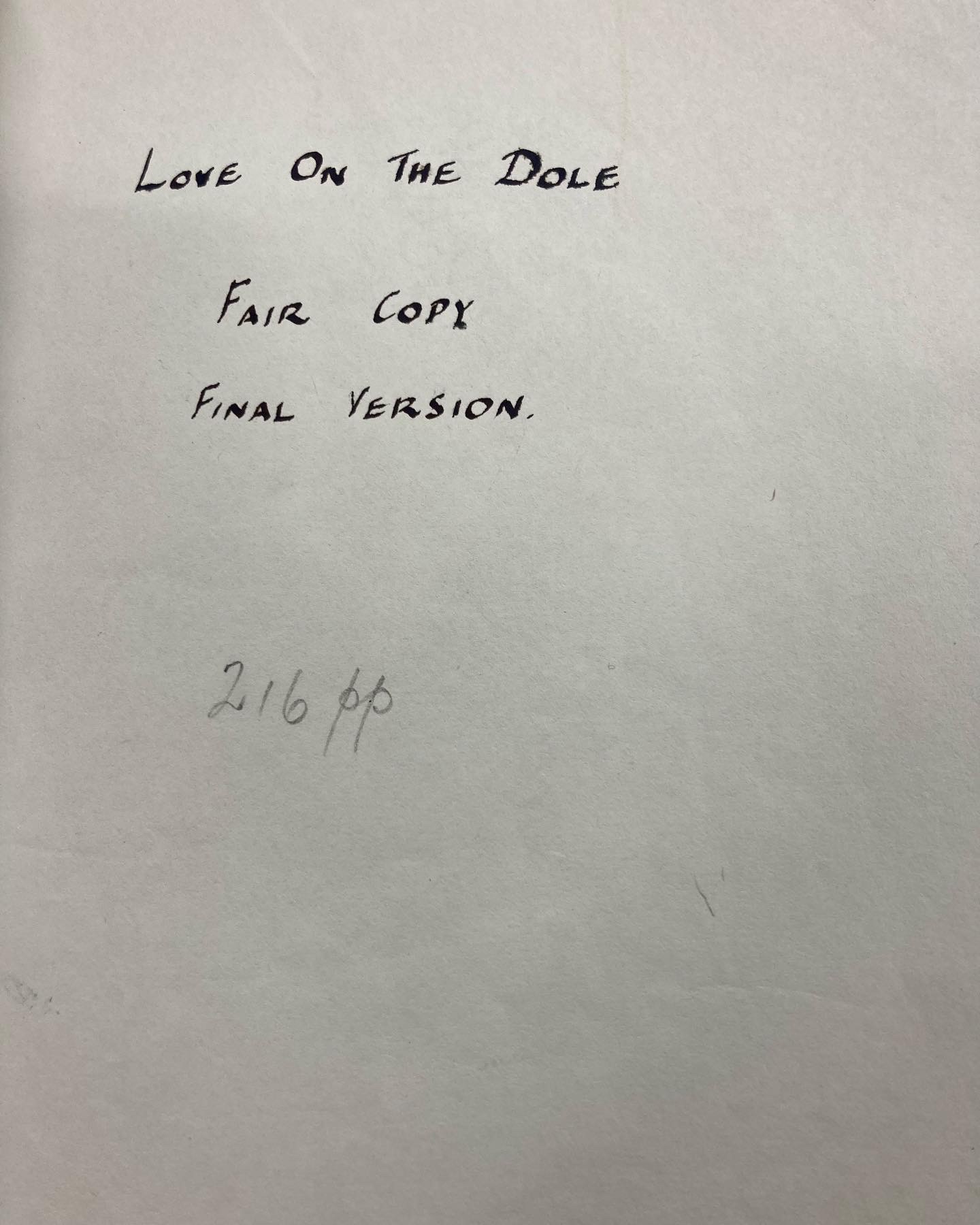
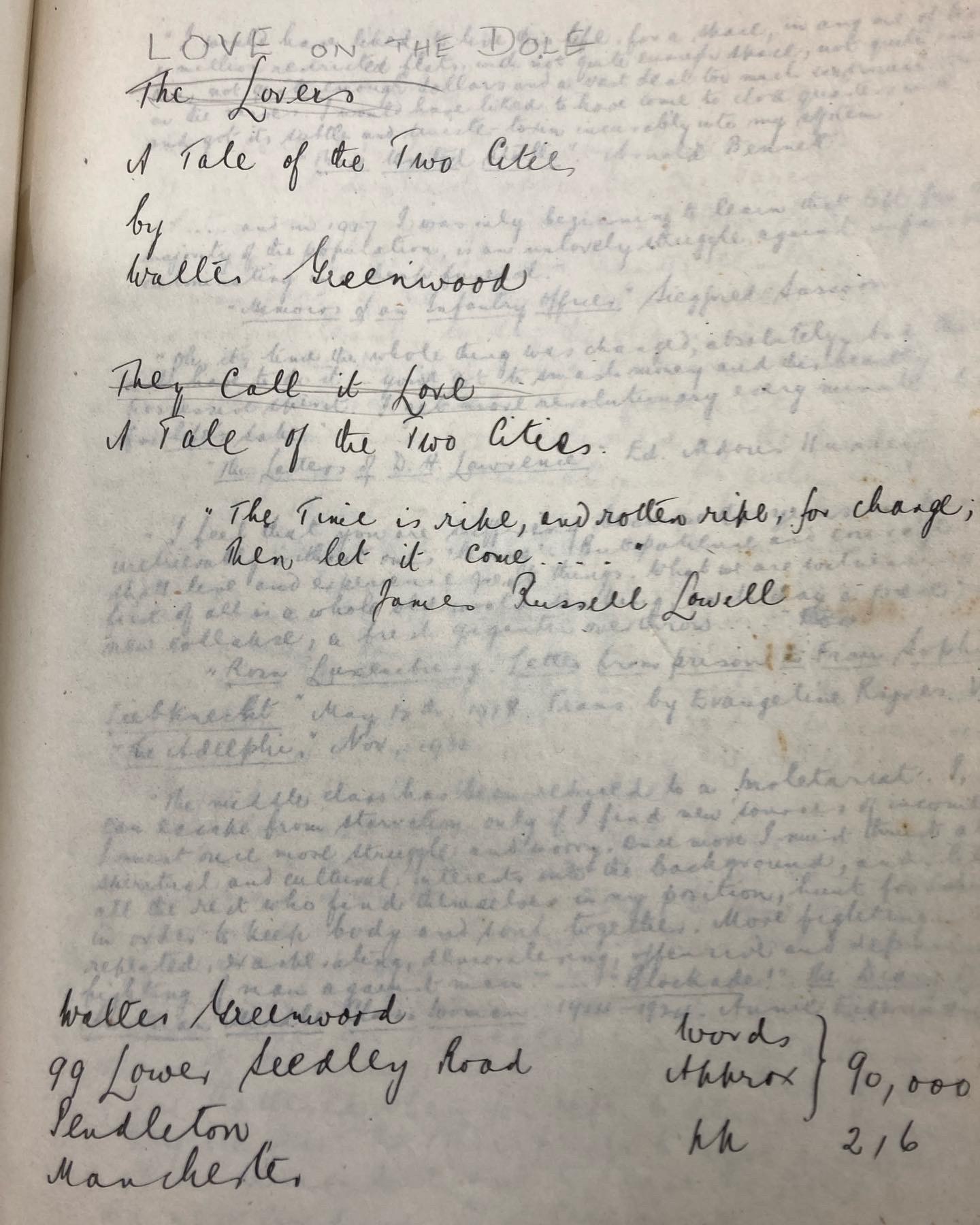
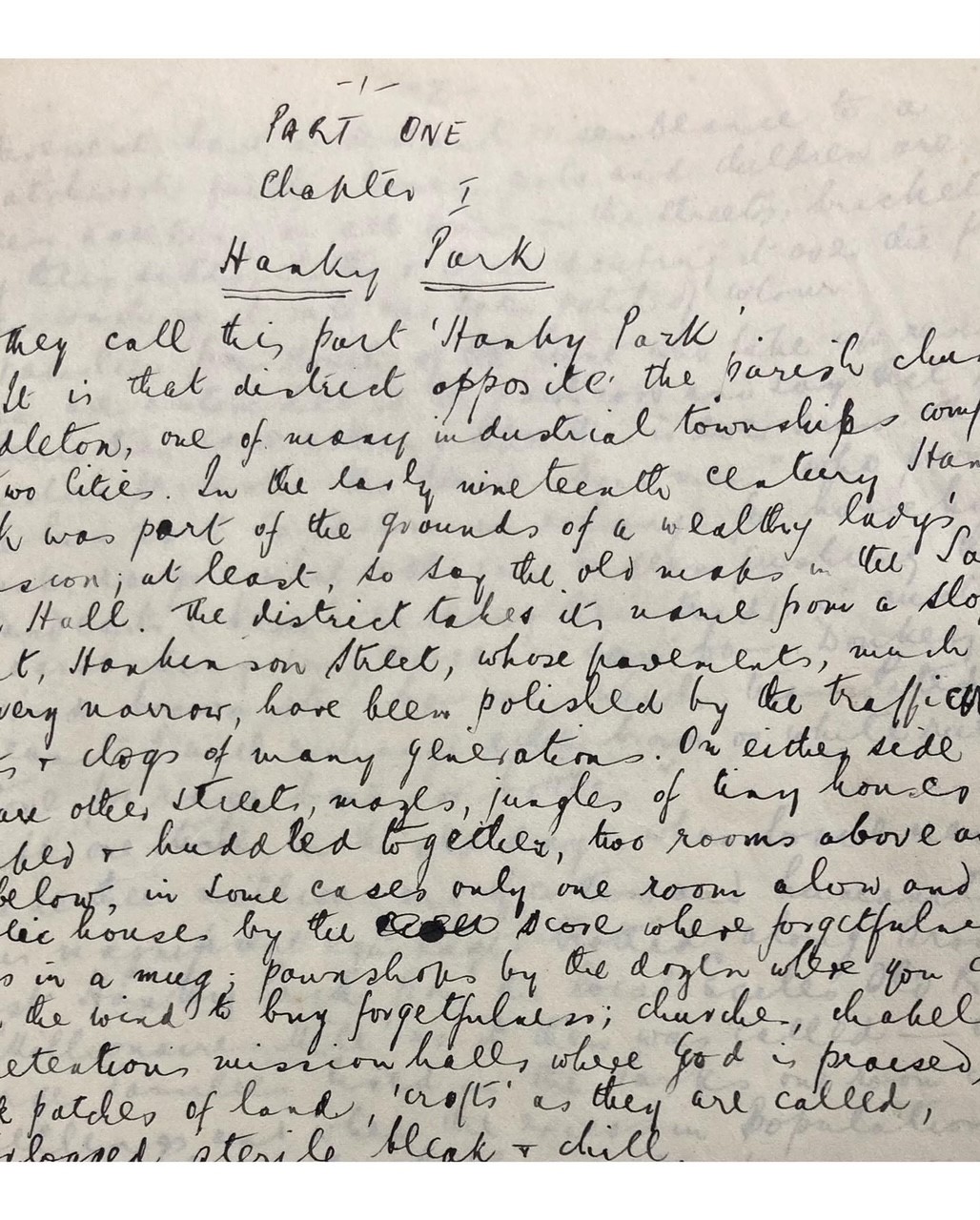
Walter Greenwood’s Love on the Dole (1933) remains one of the most influential portrayals of working-class life in the area known locally as Hanky Park, a past area once bounded by Broad Street, Ellor Street, Cross Lane, and Fitzwarren Street. At the peak, the neighbourhood housed thousands of residents in dense terraced housing before large-scale redevelopment took hold. Inspired partly by real events such as the 1931 protests later known as the “Battle of Bexley Square,” Greenwood’s work captured both hardship and resilience. The University’s Walter Greenwood Collection holds original manuscripts of Love on the Dole, a direct connection to this literary history. Similarly, the playwright Shelagh Delaney drew upon the social landscape. Known for A Taste of Honey (1958), her work explored the tensions and humour of everyday life within a changing city. In Ken Russell’s 1960 documentary (see below video), she described Salford as “a restless city, alive and dying in the same breath,” a phrase that continues to resonate when considering the pace of post-war redevelopment.
Visual artists also documented these transitions. Between 1915 and 1925, L.S. Lowry studied at the Royal Technical College, Salford, refining the distinctive style that would later define his work. Many of the industrial landscapes he depicted were undergoing rapid change by the mid-twentieth century, as large-scale housing clearance and redevelopment programmes transformed neighbourhoods across Pendleton, Islington, Ordsall, and beyond. Much of his work looks out toward Peel Park. Local historian Robert Roberts described this period as one in which a distinctive culture disappeared alongside the built fabric, even as communities adapted to new environments; “a kind of culture unlikely to rise again had gone in that rubble.” Documentary photographer Shirley Baker captured these moments with sensitivity. Active between 1960 and 1981, her photographs record both the physical transformation of Salford and the experiences of residents navigating these changes. Her work invites reflection on the relationship between architecture, memory, and identity, preserving scenes that no longer exist in the contemporary city.
Taken together, these writers, artists, and observers offer different perspectives on a shared moment of change. Their work reveals how Salford’s identity was infuenced not only by its industrial heritage and redevelopment, but also by the experiences of those who lived throughout. From the creative illustrations of Eric Satchwell to the contributions of often-overlooked figures such as Edith Louisa Cavell, these stories help illuminate the people behind the city.
Special thanks: Charlotte Delaney, Estate of Shirley Baker/Mary Evans Picture Library, Lowry Art Centre (The Lowry Collection, Salford).




[…] Building – is the Walter Greenwood Collection. Greenwood (1903-1974) was a Salford born working-class writer, and I think there is something powerful in physical proximity of these two collections: the […]
[…] close to Peel Park. It was the former site of Belle Vue House and Salford Grammer School, where Salford Stalwarts actor Albert Finney, film director Mike Leigh, singer Graham Nash, and Joy Division members Peter […]
[…] a previous post, I mentioned the artist Laurence Stephen Lowry (1887-1976), but these images deserve a […]
[…] few words I wrote about Shirley Baker and other Salford Stalwarts earlier this […]
[…] I an certain that the images within the archive are products of Baker’s work. I am so confident in this assertion that I believe she captured them somewhere between her […]
[…] employment wasn’t mentioned (slightly disappointing). However, I’m certain these are Baker’s artistic by-products. Captured in between her main photographs that became more well known and […]
[…] Building – is the Walter Greenwood Collection. Greenwood (1903-1974) was a Salford born working-class writer, and I think there is something powerful in physical proximity of these two collections: the […]
[…] mentioned the artist Laurence Stephen Lowry (1887-1976) in a previous post, but these images deserve their own […]