Over the past 12 months, I have had the privilege of working as the Graduate Sustainability Communications & Engagement Officer at the University of Salford. It has been a unique opportunity to help communicate and champion sustainability across our campus and wider community, while learning more about how universities can drive positive environmental and social change.
From coordinating sustainability events to developing social media campaigns, this role has given me a front-row seat to the passion and creativity that exists across our University community when it comes to sustainability.
Communicating sustainability at Salford
A core part of my role has been helping to share the University’s sustainability work with students, colleagues and the wider community. The aim is simple but powerful: increase awareness, inspire action and demonstrate how sustainability is embedded across the University’s activities.
Through a mix of digital communications, events and engagement programmes, we work to encourage people to take positive steps, whether that’s learning about environmental issues, changing daily habits, or getting involved in sustainability initiatives on campus.
Over the past year, I have contributed to a wide range of communications outputs, including:
- Writing website content and blog posts
- Managing social media content for sustainability channels
- Creating event promotions and digital assets
- Producing accessible communications and guidance
- Sharing stories about sustainability research, initiatives and community partnerships
Each piece of communication plays a small but important role in helping people understand how sustainability connects to their own lives and work.
Bringing sustainability to life through events
One of the highlights of the role has been supporting and promoting sustainability events throughout the year.
A major focus has been Go Green Salford, our flagship sustainability festival which brings together students, colleagues and external partners through a diverse programme of activities. Across the events I’ve worked on, we’ve hosted talks, workshops, nature walks and creative sessions designed to make sustainability accessible and engaging.
Some of my favourite moments have included:
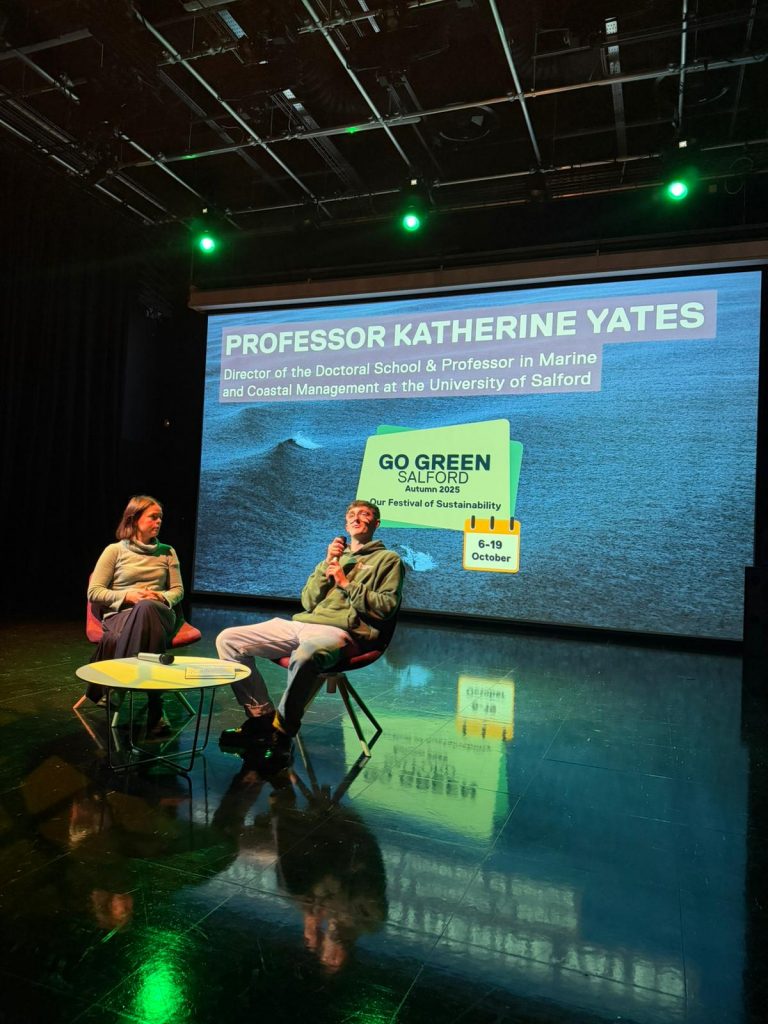
- Hosting a screening and Q&A of Ocean with David Attenborough, followed by a discussion with our very own Professor Katherine Yates, exploring the importance of ocean conservation and the role research plays in protecting marine ecosystems
- Guided biodiversity walks through Peel Park and surrounding areas, helping people connect with the nature on our doorstep
- Interactive workshops that encourage people to reflect on climate and environmental challenges
- Creative sustainability sessions that combine learning with hands-on activities
- Opportunities for students and staff to collaborate and share ideas
Events like these are powerful because they move sustainability beyond theory and into real experiences.
Working with a passionate community
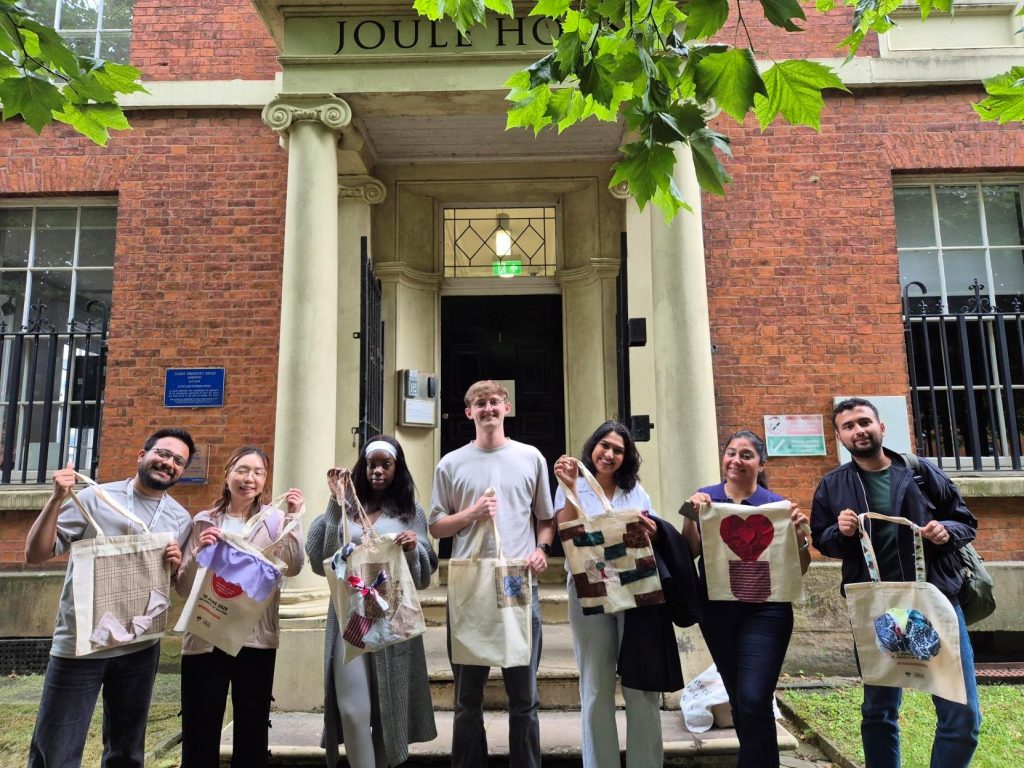
What has stood out most to me during this role is the enthusiasm across the University community.
Sustainability at Salford is not driven by one team alone. It involves collaboration across departments, student groups, academics, professional services and external partners. Working alongside colleagues from across the University – and seeking students bring their own ideas and energy – has been incredibly inspiring.
From colleagues embedding sustainability in teaching and research, to students leading environmental initiatives, sustainability is becoming part of everyday culture at Salford.
Working with the Students’ Union and empowering student groups
A particularly rewarding part of this role has been working closely with the University of Salford Students’ Union and exploring how we can better support student-led sustainability.
Students are often at the heart of change on campus, and one of the key projects I’ve worked on has been developing a Student Groups x Sustainability programme. The aim is to make it easier for student groups to take meaningful sustainability action in a way that feels achievable, relevant and rewarding.
The project focuses on giving groups:
- Clear, simple actions they can take to become more sustainable
- Guidance and support to help them get started
- A way to track and evidence their progress
- Recognition for the positive impact they create
Working on this project has involved collaborating with the Students’ Union, designing engagement processes, and thinking carefully about how to make sustainability accessible to a wide range of student groups – not just those already engaged with environmental issues.
What I’ve found most valuable is seeing how sustainability can be shaped by students themselves. Whether it’s small changes to how events are run, or bigger ideas around awareness and advocacy, student groups bring creativity, energy and fresh perspectives that are essential to building a more sustainable University.
This work has reinforced something important: lasting change happens when people feel ownership over it. By supporting student groups to lead on sustainability, we’re helping to build a culture where sustainable thinking becomes part of everyday student life.
Learning and growing professionally
This role has also been a significant learning experience for me personally.
Coming from a background in marine biology, my experience before this role was rooted in understanding ecosystems, biodiversity and the science behind environmental change. While that perspective has been incredibly valuable, stepping into a communications and engagement role has shown me just how important it is to translate that science into something people can connect with.
Sustainability is not just about research or data – it’s about people. It’s about how we communicate ideas, inspire action and create opportunities for others to get involved. This role has helped me bridge that gap between science and communication, learning how to make complex topics more accessible, relevant and engaging.
It has also highlighted the value of bringing different backgrounds into sustainability roles. Whether someone comes from science, communications, business or the arts, each perspective adds something important. For me, my marine biology background has shaped how I think about environmental challenges, but this role has expanded how I share those ideas and work with others to drive change.
Over the past year, I developed skills in:
- Strategic communications
- Event planning and promotion
- Stakeholder engagement
- Accessible and inclusive communication
- Digital storytelling and social media
These are skills that complement my scientific background and will continue to shape how I approach sustainability work in the future.
Looking ahead
As my time in this role comes to an end, I feel incredibly grateful for the opportunity to have contributed to sustainability communications at the University of Salford.
The work happening across the University – from campus initiatives to research and student engagement – shows how higher education institutes can play a vital role in creating a more sustainable future.
I’m proud to have been part of the Sustainability Team helping to share these stories and inspire others to get involved.
Most importantly, I leave with a strong sense that small actions, strong communication and collaborative communities can create meaningful change.