In 2025 the Sustainability Team began monitoring bee and butterfly populations due to an increased team focus on supporting nature and boosting biodiversity. In order to make any meaningful impact, we need to find out what’s already living here. This means walking around all areas of campus at a steady pace and taking note of different species at each section. We will repeat this every year with monitoring season kicking off in March and carrying on to September!
Last year our campus had a refresh in many areas of campus including:
- all box planters with more flowering plants
- a long stretch of cornflowers by the Faith Centre
- the green wall with more flowers
- a new flowerbed at Allerton
- herb beds by Chapman and Mary Seacole
We have a google map showing off some of our favourite spaces, great if you want to spend more time outside right here this summer!
Here are our findings from last year, read to the end to find out why we’re expecting even more of these wonderful creatures this year.
Bees
One of our most common campus bees is the Honeybee which indicates there must be a hive nearby! A common visitor is also the Buff-tailed Bumblebee, who is part of the ‘Big 8’ group which refers to the 8 most common bumblebees nationally. The buff-tailed can be found in parks and gardens too, you can tell them apart from other bumbles as their last stripe on their body is off-white. We also discovered some unique species such as the Tawny and Ashy Mining bees which are nesting in Peel Gardens – look out for some bright orange or black and white bees zipping past! A surprising fact about most bees, including these mining bees, is that they nest underground and not in hives. Areas of bare ground are a hotspot, and you may be able to see little entrance holes, although they can be extremely minute.
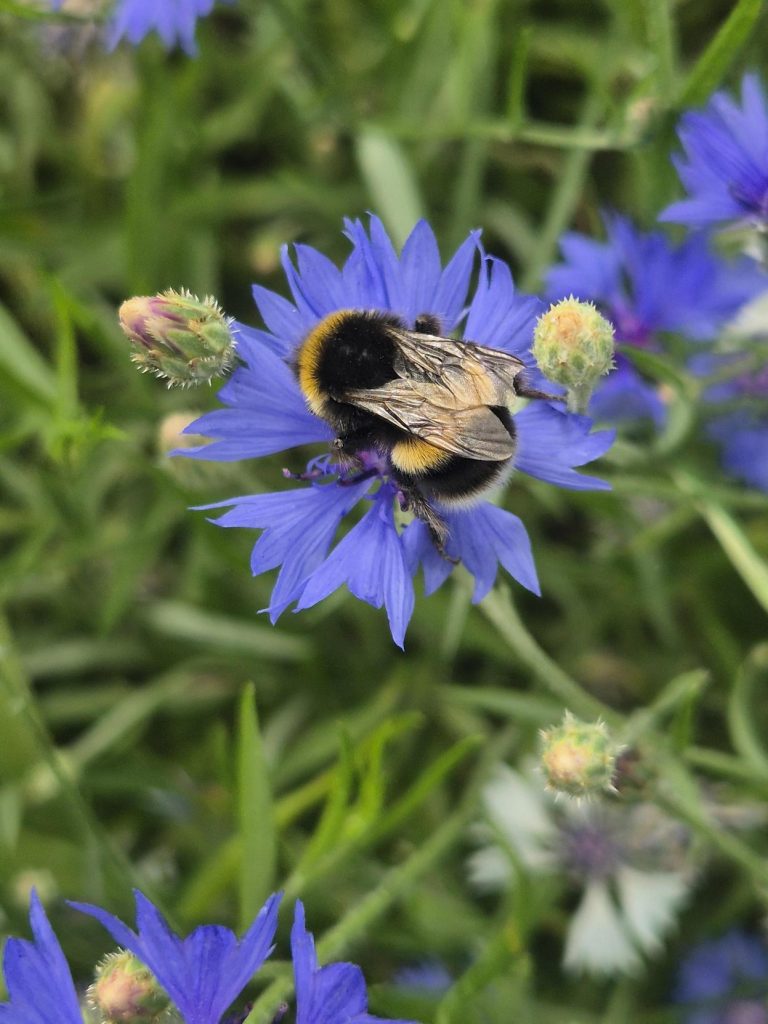
The table below is a tally of bees we found across our 2025 surveying. The Red-tailed bumblebee was especially common at David Lewis Playing Fields, but the Honeybee, Buff-tailed and Common Carder bumble bee were the most prolific as they were found across most areas of campus. At the Faith Centre we planted a long stretch of blue cornflowers and the bees loved it, especially honeybees! Bees are more attracted to blue and purple flowers as they don’t have red receptors in their eyes.
| Species | Total |
| Honeybee | 150 |
| Buff-tailed bumble | 100 |
| Red-tailed bumble | 45 |
| White-tailed bumble | 42 |
| Common carder bumble | 30 |
| Tree bumble | 24 |
| Ashy mining bee | 9 |
| Early bumble | 3 |
| Patchwork leafcutter | 2 |
| Tawny mining bee | 1 |
| Garden bumble | 0 |
The RHS have researched the most attractive plants to all types of pollinators so if you want to encourage them to your own garden, look out for a ‘Plants for Pollinators’ symbol when buying seeds or plants. (Fun fact – bees and butterflies aren’t the only pollinators by far, in Mexico bats are vital in the production of agave and tequila!)
Bee posts
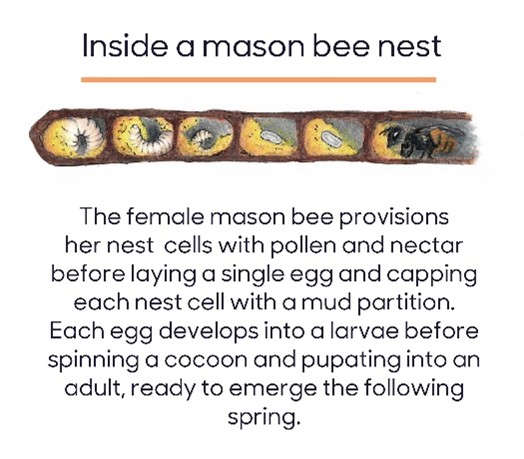
We installed 7 specially designed bee posts by Niche Environmental which have different sized holes to suit different solitary species. This artificially mimics natural habitats such as hollow stems, similar to insect hotels. The posts aren’t just used by bees, such as the Leafcutter or Yellow-face, but wasps too such as the Ruby-tail or Mason. Insects will spend spring and summer filling the cavity with multiple pockets each containing larvae and enough food to sustain them till it’s time to hatch the following spring.
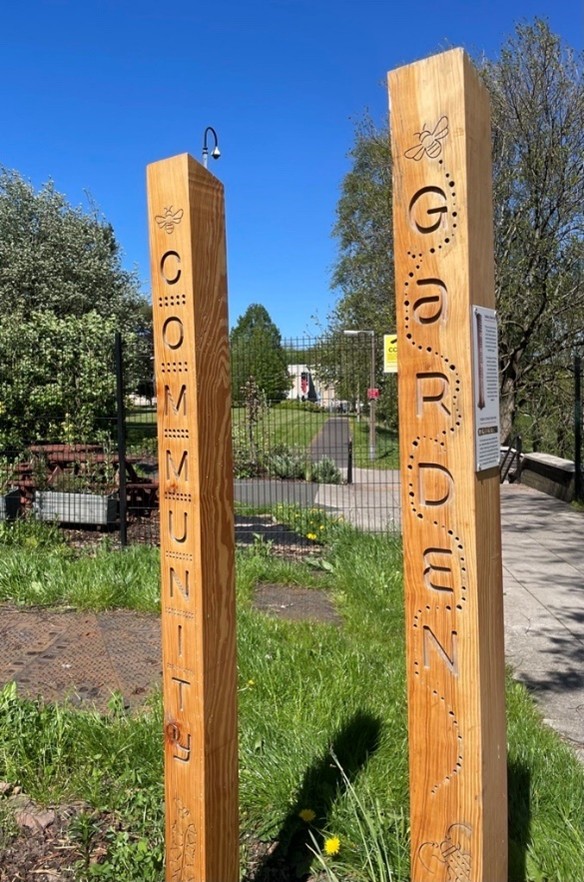
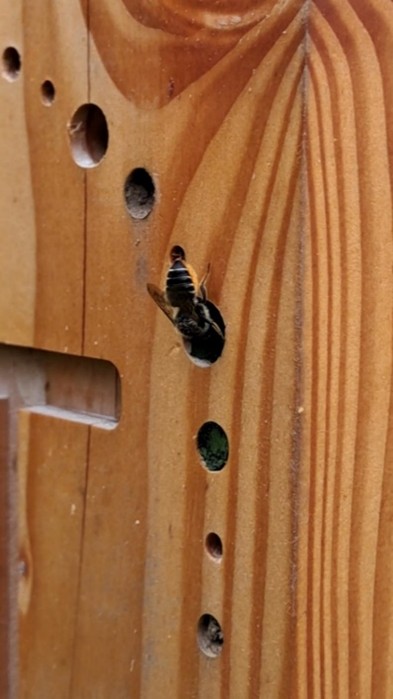
Our most successful bee posts are at the Community Growing Space. We think they are particularly attracted to the herbs and flowers growing close by. We were also lucky enough to capture this Patchwork Leafcutter Bee creating its nest out of leaves over at the Faith Centre, they have a bright orange brush underneath which collects pollen.
Leafcutter bees are really interesting to watch as the diligently cut up leaves, bring them back to their nest to bind pieces together with saliva and create multiple larvae parcels.
Butterflies
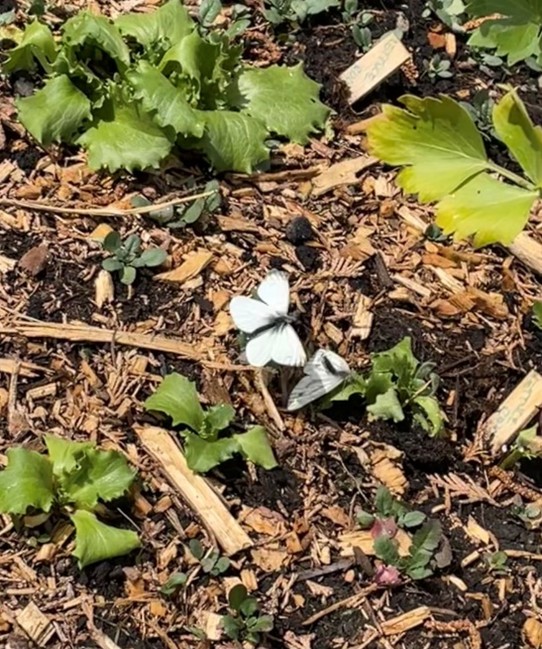
Our next key species are butterflies! This group are recognised as an environmental indicator species as they are very sensitive to changes in the environment. Therefore, if they are present in an area, it often means conditions are right to support other insect groups. There are just 60 UK species so we’re very lucky to have at least 13 right here at the university.
The most common species of butterfly on campus are the Large White butterfly and second the Small White. Most other butterfly species were never seen more than 3 times. These are also the most common across England as well as Gatekeeper, Red Admiral and Meadow Brown.
Like bees, we found the Faith Centre cornflower embankment was most popular as well as David Lewis Playing Fields. These are more natural areas with loads of flowers as well as sheltered sections so they can rest without disturbance, which is really important too. Butterflies are cold-blooded and need to warm up their wings by basking in the sun. We are incorporating more nature onto our campus by using planters where there isn’t any grass or flowerbeds available, such as along the paths in the core part of Peel Park campus. This is both to provide flowers and food but rest spots so they can keep flying.
| Species | Total |
| Large White butterfly | 26 |
| Small White butterfly | 19 |
| Meadow Brown | 12 |
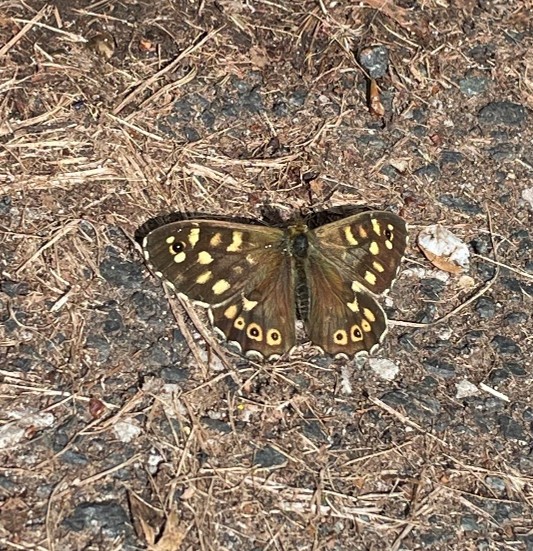
| Speckled Wood butterfly | 7 |
| Orange-tipped butterfly | 3 |
| Green-veined butterfly | 2 |
| Common Blue butterfly | 2 |
| Red admiral butterfly | 2 |
| Painted lady butterfly | 2 |
| Mint moth | 1 |
| Comma butterfly | 1 |
| Cinnabar moth | 1 |
| Purple and Gold moth | 1 |
Next Steps
This year will see the benefits of a new wildflower verge opposite the Sports Centre and tulips along the A6 on Frederick Road campus. Larvae will be emerging from bee posts this Spring and Summer with more insects setting up shop too. Our campus will look a bit different this year as our Landscape & Grounds Team are taking a let it grow approach. This means in wilder areas, letting grass and wildflowers grow all through the Summer. This is a great way of supporting all sorts of life, when there’s more insects there’s more food for mammals too. Pollinators such as bees and butterflies are vital for the health of the ecosystem, making sure plants can reproduce, but also our own health as 84% of crops require insect pollination. Our new planting strategy has a focus on pollinators and one way to support them is to provide a year-round food source by choosing a range of plants that flower at different times of the year.
Fancy finding out more? We have a special session on World Bee Day (May 20th) involving a talk about bees and then we’ll get outside and start identifying some together! Sign up to the session here.