By Laiba Tariq
Introduction
Since graduating last year from the University of Salford with a degree in Architectural Design and Technology, I knew I wanted a career where I could merge my passion for designing buildings with sustainability. During my studies, I became interested in sustainability issues concerning the design and management of buildings. Although university assignments introduced me to the theoretical aspect of designing energy-efficient buildings, I was curious about practical performance of such buildings. That is why I applied for this internship position.
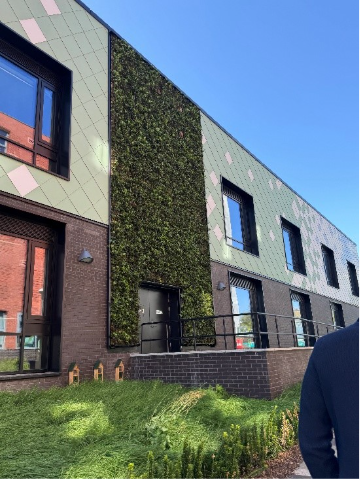
Becoming a part of the Environmental Sustainability Team within the Estates and Facilities department as a Sustainable Energy Intern gave me exactly that opportunity. Over the past six months, I’ve had the chance to work along with some brilliant people; Phil Haris, Emma Goodchild, Olivia Regan, Zoe Pegg and Iona Anderson. My main role within the team was to help improve the performance of our campus buildings through energy analysis, building management systems and data driven changes.
What I worked on
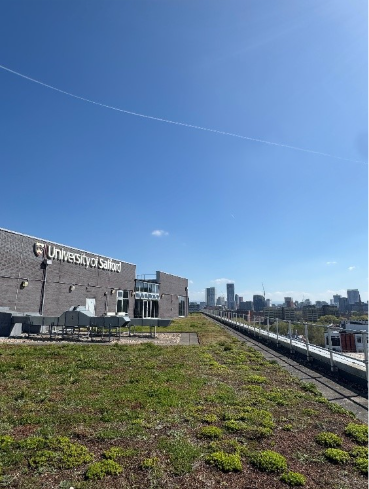
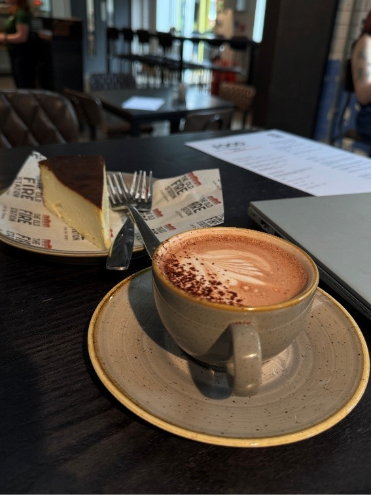
My day-to-day responsibilities mainly involved analysing energy consumption in relevance to gas, electricity and water. Whilst also identifying any suspicious trends. I did this through BMS – Building Management Systems. By doing this I learnt to monitor different buildings, identify faults and investigate heating and cooling issues. One of the most interesting parts was seeing how every building on campus operated differently and how they all need a different approach to becoming more energy efficient. My day also involved heading to The Old Fire Station Brewery and Bakery to grab a quick hot chocolate – 100% recommend.
I have worked on several reports to document my work and leave behind information that could help the rest of the team. Some of my most interesting work includes investigating the impact on the campus during the heatwave in June 2026, analysing Clifford Whitworth occupancy during out of hours and asking the question of whether it should be open 24/7.
Besides that, I have also been involved in some very interesting decarbonisation projects such as Mary Seacole. I actively supported in the upgrade of fluorescent lighting to LED by conducting a thorough lighting survey.
Sustainability is not only about improving buildings and reducing energy consumption; it is also about engaging the people who use those spaces every day. During my internship, I had the opportunity to support the Go Green Salford Sustainability Fair, which brought together students and staff to learn more about sustainability initiatives taking place across the University.
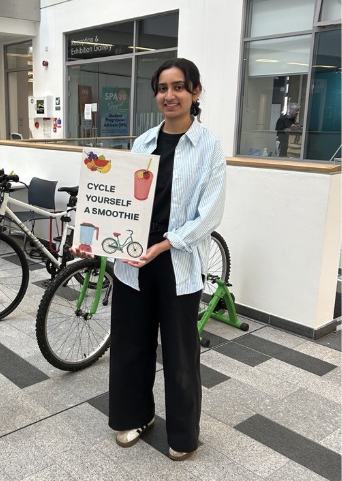
Being involved in the event gave me the chance to see a different side of sustainability work, moving beyond data and technical analysis to focus on communication, awareness and collaboration. I helped engage with visitors, discuss sustainability topics and showcase the work being carried out across the University to support its environmental goals. And of course, helped to operate ‘cycle yourself a smoothie’, where people could cycle on a bike to blend their own smoothies.
The event highlighted how achieving Net Zero requires everyone across the organisation to play a role, from improving operational efficiency within buildings to encouraging sustainable behaviours within the University community.
Coming from an Architectural Design and Technology background, I initially viewed sustainability through the lens of building design, materials and energy performance. However, my internship has shown me that sustainable transformation requires a combination of technical solutions, effective communication and collaboration between different teams and communities.
Skills I have developed
One of the key skills I have developed is the ability to analyse and interpret energy data and use it to identify opportunities for improvement. It has shown me that behind every graph and spreadsheet there is a story about how a building is performing and sometimes that story involves a boiler having a bad day. Perhaps the biggest surprise has been my relationship with Excel. Before this internship I thought I knew excel reasonably well. I could make occasional charts and create formulas oftentimes without the need for a quick google search. I quickly discovered I had only scratched the surface. I have now spent more time on excel than I’d ever imagine possible. But I do see the importance of it all, especially since the data can be used to make informed design decisions and contribute to wider sustainability goals. I never expected to become so enthusiastic about spreadsheets but here we are!
I would like to thank everyone within the Estates and Facilities team for their support throughout my internship. Their willingness to share their knowledge has made this an incredibly rewarding experience, and I am grateful to have had the opportunity to contribute towards the University’s sustainability ambitions.