The Laboratory Efficiency Assessment Framework (LEAF) provides a structured approach to improving the sustainability of laboratory spaces, ensuring that research is not only focused on solving sustainability challenges but is also conducted as sustainably as possible. By participating in LEAF, laboratories can reduce energy use, minimise waste, improve resource efficiency and lower carbon emissions, helping to create more environmentally responsible research environments.
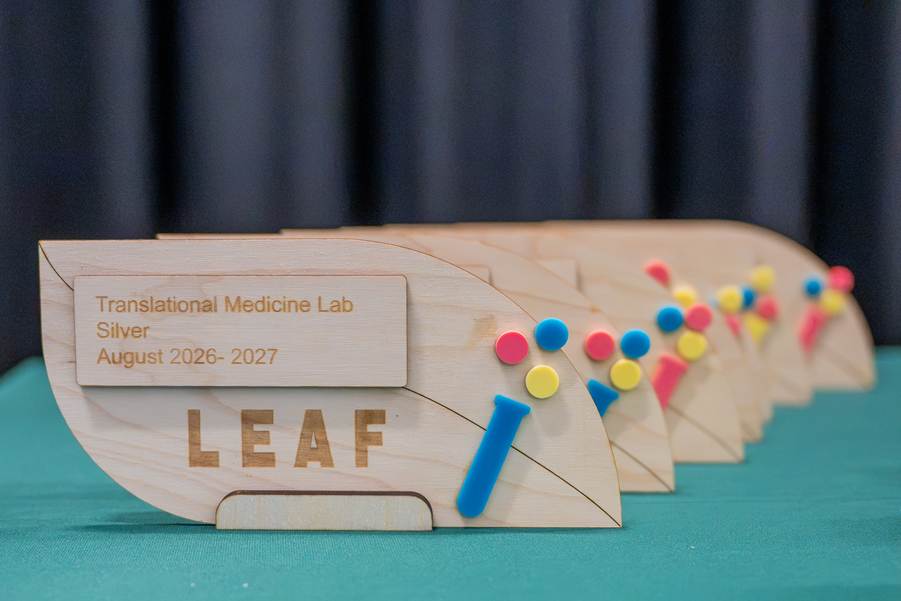
LEAF recognises achievement across three levels: Bronze, Silver and Gold, with each accreditation building upon increasingly ambitious sustainability actions and impacts. Originally introduced to the University by Matt Jones, this year marked the second annual celebration of LEAF accreditations at Salford. We were delighted to recognise five Silver accredited laboratories and two Bronze accredited laboratories, with several teams progressing directly to Silver accreditation, demonstrating the significant strides being made across our research and teaching spaces.
This has been supported by a wider programme of work to improve the sustainability of our lab operations, particularly in Cockcroft building. The collaborative work led by Technical Managers Gayle Wilson and Rebecca Tarbox, academic Matt Jones and Energy and Carbon Manager Phil Harris has enabled detailed assessments of lab equipment and building operations, identifying opportunities to improve energy efficiency and reduce environmental impacts.
Importantly, this work also provided opportunities for master’s students to participate in research with direct real-world application, allowing them to contribute to projects that are helping shape more sustainable lab practices across the University.
Additionally, the introduction of systems such as SISO has improved the monitoring and management of consumables. By supporting resource sharing between laboratories and providing greater visibility of stock levels and usage, these systems help reduce unnecessary purchasing and contribute to reducing emissions with the University’s largest carbon emissions category, scope 3.
Bronze
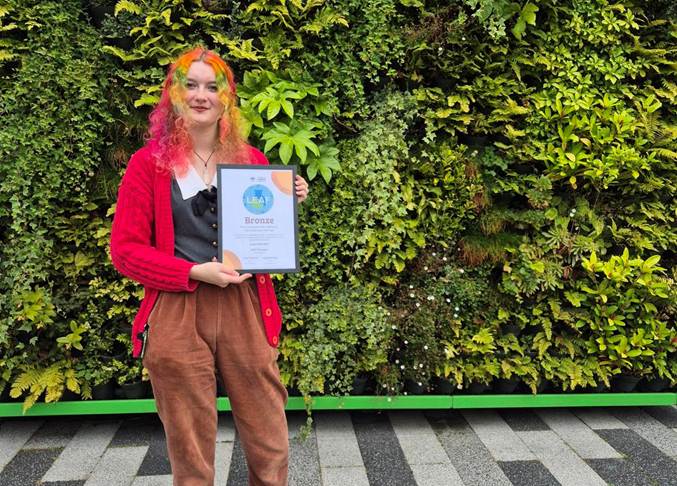
Chemistry 310 achieved Bronze LEAF accreditation in August, marking a final achievement for lab technician Helen Ingley before leaving the University to begin her PhD studies. Their clear and effective systems for labelling consumables within the lab space has supported lab users in tracking consumables to avoid waste and unnecessary orders.
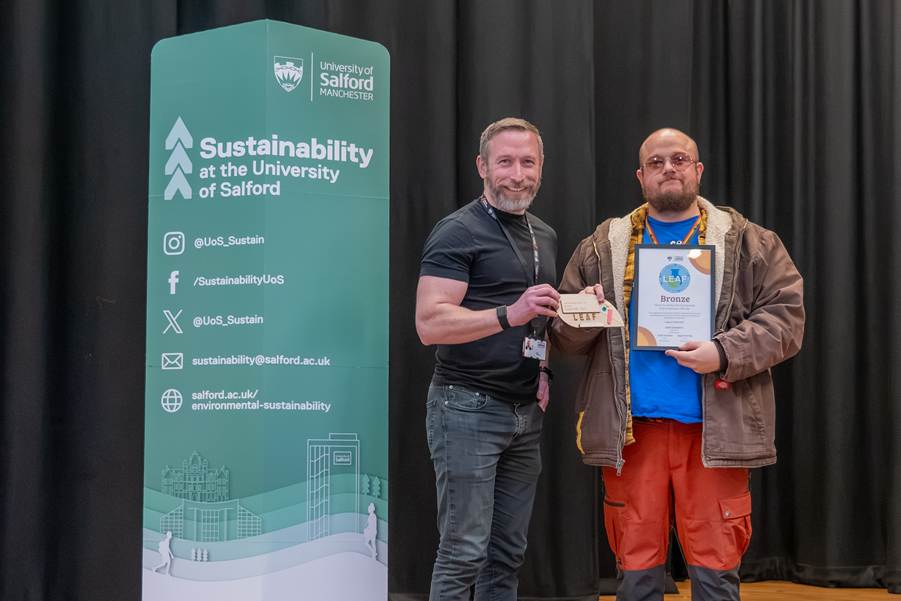
Located within the Science, Environment and Engineering Building, Composites 312 also achieved Bronze accreditation in August under the leadership of laboratory technician Michael Christopher.
The team has focused on reducing material waste by finding innovative ways to repurpose materials that might otherwise be discarded. One example includes collecting surplus resin from moulding processes and using it to create functional items, helping to maximise resource value while reducing waste streams generated through laboratory activity.
Silver
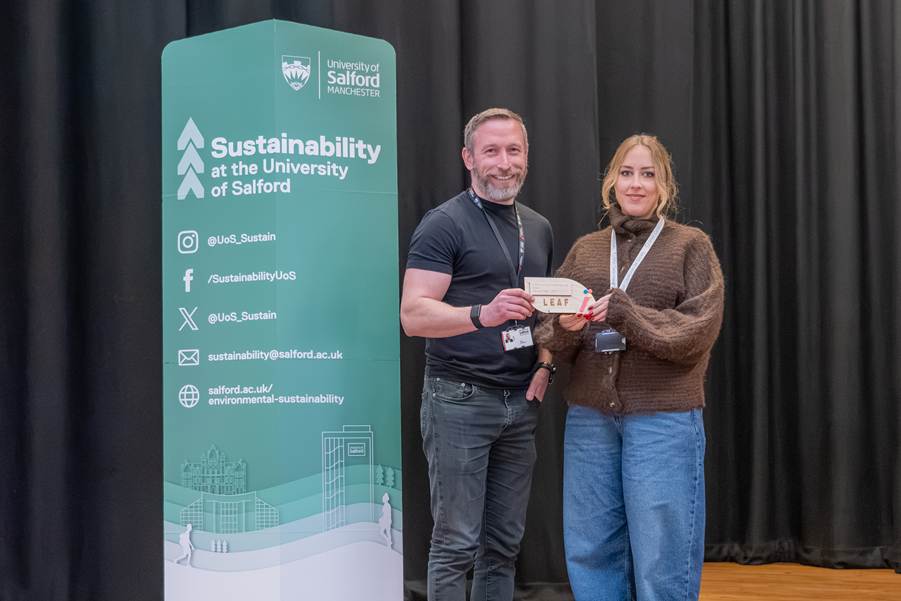
Led by Bethan Samphire-Noden, the Cardiovascular Physiology Laboratory was the University’s first LEAF accredited laboratory and achieved Silver accreditation less than three months after being awarded Bronze.
Since joining the programme, the team has played an important role in supporting wider laboratory sustainability efforts, actively sharing knowledge and best practice with colleagues across Cockcroft. One particularly successful initiative has been the establishment of a pipette tip box recycling scheme, which has since been adopted and utilised by other laboratories, extending its impact beyond a single research space.
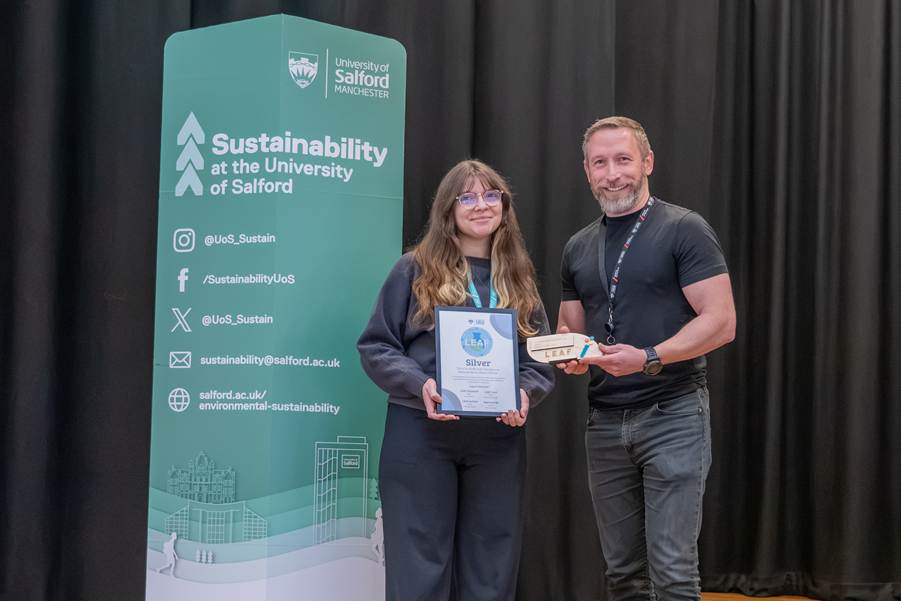
Led by Alex Couchman, the Translational Medicine Laboratories became the first laboratories at Salford to move directly to Silver accreditation.
The laboratories have established robust systems for monitoring and managing consumables, helping researchers make informed decisions about resource use while reducing unnecessary purchasing. By improving stock visibility and encouraging efficient use of materials, the team is helping minimise both procurement costs and emissions associated with manufacturing and transportation.
The laboratory has also taken a collaborative approach to cold storage management, coordinating storage requirements across projects to ensure freezers and other temperature-controlled equipment operate as efficiently as possible. Given the significant energy demand associated with laboratory cold storage, these improvements represent an important contribution to reducing environmental impacts.
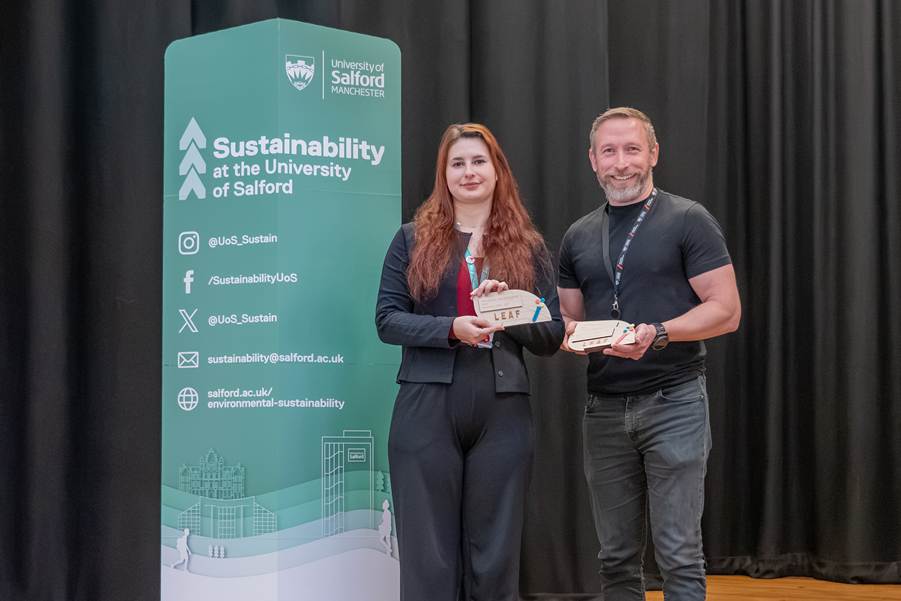
Laboratory technician Wiktoria Wisniewska, supported by Richard Birtles, Laura Brettell, Geoff Hide and Henry Madubuike, successfully led the Microbiology, Molecular Biology and Parasitology laboratories to Silver accreditation.
Wiktoria’s hard work and dedication has enabled the LEAF criteria to be met across multiple lab spaces simultaneously. Through the implementation of effective systems for consumables management, equipment utilisation and resource tracking, laboratory users are supported in carrying out research in a way that is both efficient and environmentally responsible.
The team has also made excellent use of signage and behavioural prompts throughout laboratory spaces. These interventions encourage users to consider the environmental impacts of their choices and support more sustainable approaches to laboratory work, including selecting appropriate grades of water and other resources where this can be achieved without compromising research quality or outcomes.
Building a More Sustainable Research Environment
As funders and awarding bodies increasingly expect laboratories to demonstrate sustainable practices, programmes such as LEAF are becoming an important part of research excellence. Beyond helping laboratories reduce their environmental impact, LEAF supports improved resource management, operational efficiency and collaboration between research teams.
If you would like to learn more about LEAF or explore how your laboratory can become involved, further information is available through the Sustainability Team and you can learn more about LEAF at the University and how to get involved here.