John arrived at Salford thinking the skills he would learn would only impact his career, but after suffering an aortic dissection that left him with severe physical and neurological difficulties, he found they also helped him adapt to a life he had never expected.
Now he is focusing on recovery and uses tools like AI to help him communicate and share his story.
What made you choose the University of Salford, and what stands out most about your time as a student?
I chose the University of Salford because it felt real. It wasn’t trying to be something abstract or distant. It was rooted in the city, surrounded by industries and people who were actually doing the work they were teaching. I came to Salford with a solid foundation in management and operations of telecoms, but my studies refined and expanded that skill set.
What stands out most from my time as a student is the sense of possibility Salford gave me. I met people who challenged me, lecturers who treated me as someone with potential rather than someone passing through, and a campus that felt alive with ambition. Salford taught me how to think critically, communicate clearly, and navigate complexity. All these skills later carried me into national‑level work protecting people’s lives and livelihoods.
Tell us about your journey since graduating.
My first role after graduating was with field operations. I ran the 2011 Census, which was a national‑scale public‑facing operation. The operation tested everything I’d learned at university.
From there, my career accelerated into heavily regulated industries across the UK, Europe, Africa, the Middle East and Malaysia. I was often working under non-disclosure agreements, but no matter what, the work was always about protecting people, systems and organisations.
Everything changed when I suffered an acute aortic dissection. Recovery has been long and complex, including the discovery of an acquired brain injury. Even so, the resilience, clarity and adaptability Salford helped instil in me helped me to rebuild and navigate this new chapter. Salford didn’t just prepare me for working life. It prepared me for surviving it.
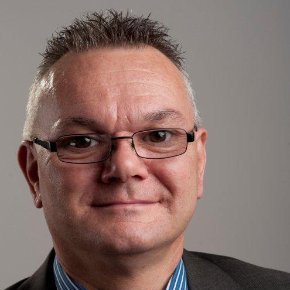
What’s a moment you’ve felt proud of since leaving Salford?
There have been many moments of pride, but one stands above the rest: my recovery. I survived aortic dissection, organ failure, infections and a coma, which statistically claims so many lives. All of that forced me to rebuild from first principles. The day I realised I could articulate my story again, with the help of tools like Microsoft Copilot, was a genuine turning point. It reminded me that resilience is not theoretical; it’s lived.
What do you do now, and what do you enjoy most about it?
Right now, my focus is on my physical and neurological recovery. Medically, the cocktail of medication is doing its job. The aorta is responding, and the primary condition is stabilising. But the same medications that keep me alive also take their toll, and until neurological testing is complete, there is still uncertainty about where I am cognitively. On difficult days, it could affect who I am in relation to my own memories, time and sense of self.
Because of this, my “work” at present is rehabilitation and rediscovery. I’m learning how to navigate memory gaps, time distortion and the challenges of forming and holding thoughts. What I enjoy most is the moments of clarity when analysis and communication briefly snap back into place. When those moments hit, it reminds me of the leader I’ve been for so many years.
I’m also engaging with Aortic Dissection Awareness, whose support has been invaluable. As my neurological picture becomes clearer, I hope to gradually rebuild my professional capabilities and explore new opportunities aligned with my experience.
It’s an unexpected chapter, but one I’m meeting with determination.
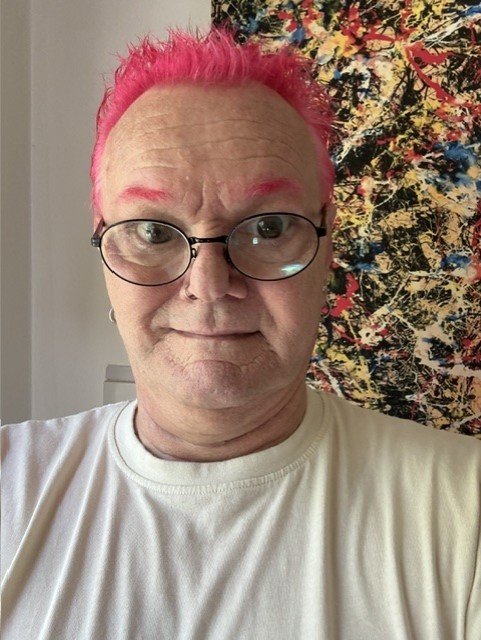
If you could share one message or piece of advice with current Salford students and recent graduates, what would it be?
You don’t need to have everything mapped out. Life will redraw your plans in ways you never expect. Sometimes those changes will happen gently or with the force of a seismic event. What matters most isn’t having a perfect roadmap but rough sketches that let you adapt when the path grows and changes around you.
And above all, don’t be afraid to ask for help. Whether it’s guidance, support, clarity or simply someone to steady the moment, reaching out is a strength, not a weakness. I’ve learned that in ways I never imagined, and all of it has taught me that resilience is built with others, not alone.
Learn widely. Stay curious. The skills you build will carry you far further than any single job title.
Is there anything else you’d like to share about your experience at Salford or since graduating?
I want to acknowledge the importance of Aortic Dissection Awareness. Their work saves so many lives and supports survivors. It also raises understanding of a condition that is often fatal before diagnosis. They have been instrumental in helping me navigate the aftermath of my own dissection, and sharing my story is part of that advocacy.
Finally, I want to credit Microsoft Copilot for assisting me in shaping this narrative. Cognitive recovery is unpredictable, and having a tool that can help organise complex thoughts into a coherent story has been invaluable.
Thank you to John for sharing his story! If you’d like to share your Salford story, we’d love to hear from you – get in touch at alumni@salford.ac.uk.