Literal and metaphorical.
Michael Beloff’s The Plateglass Universities (1968) explores a transformative period in British higher education. His title is both literal and metaphorical, referring to seven new universities established between 1961 and 1965 and the contemporary, glass-fronted architecture that helped define their identities. Beloff popularised a term now regularly used alongside the more established categories of Ancient, Redbrick and Whitetile universities.
The seven institutions Beloff examined were Sussex completed in 1961, East Anglia (1963), York (1963), Lancaster (1964), Essex (1964), Kent (1965) and Warwick (1965). Their creation was supported by the University Grants Committee within a wider movement to expand higher education. Earlier initiatives, including the Percy Report (1945) and the White Paper on Technical Education (1956), addressed the need for advanced technical education. The Robbins Report on Higher Education (1963) reinforced the expansion already underway and supported the elevation of the Colleges of Advanced Technology to university status. These reforms aimed to widen access and modernise curricula. While Beloff focused on a specific group, he also recognised the advanced colleges, portraying their delayed recognition as universities as leaving them almost like “second-class citizens”.
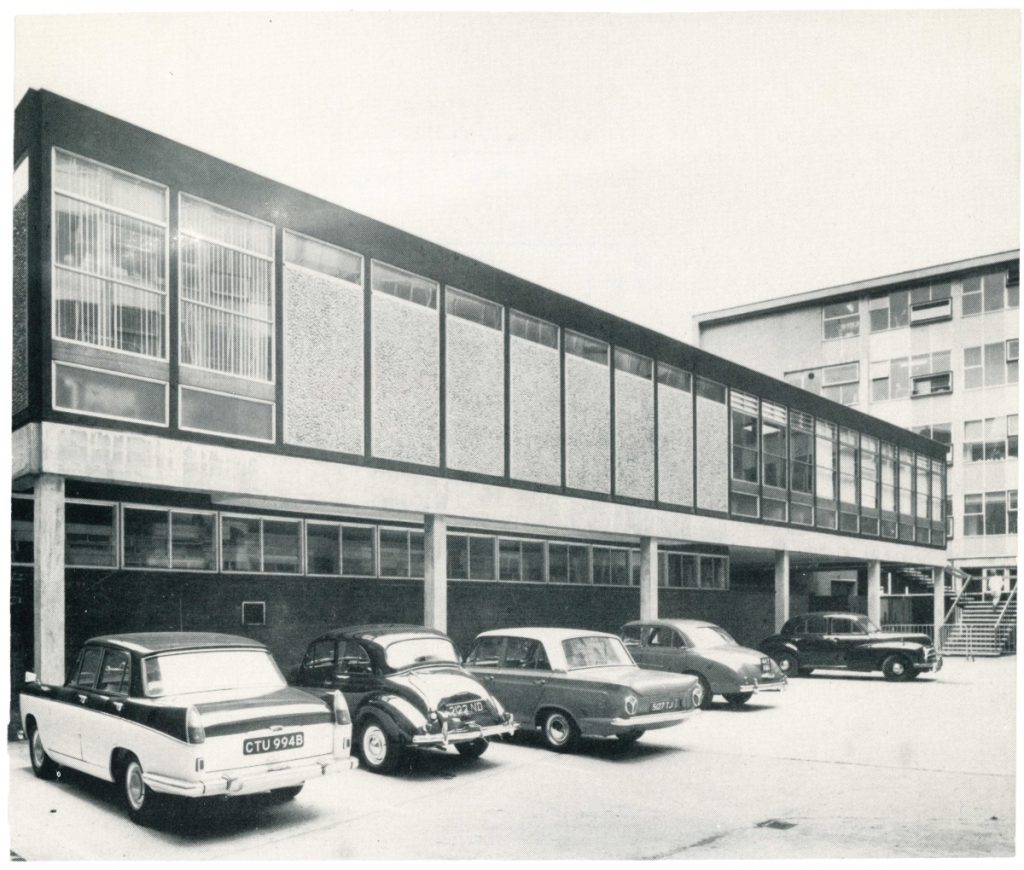
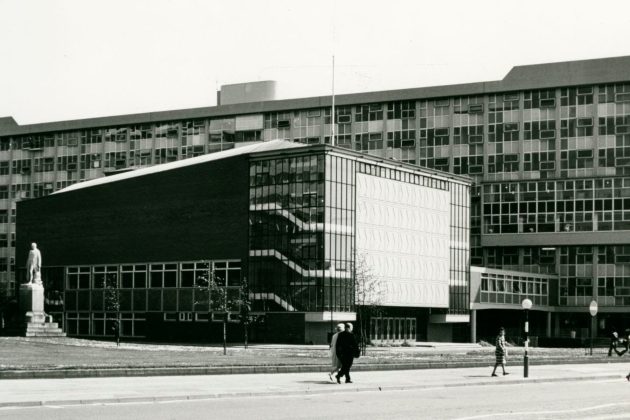
Beloff’s analysis isn’t really about their architecture, although he acknowledges its significance in establishing the group’s identity. Plateglass campuses demonstrated a “flair and enthusiastic approach to education”, merging innovative design with progressive pedagogy. Contemporary materials reflected new teaching philosophies, symbolising transparency, modernity and ambition. Yet there was also tension between these aspirations and higher education’s longstanding traditions. He compared the new institutions to cathedral city universities, noting that even the most modern campuses struggled to escape the continuity and conformity of older institutions.
His work captures the universities at their most ambitious and vulnerable, offering insight into their socioeconomic and cultural contexts. His prose blends critique and admiration, as in his description of the “particular green of pines and the soft, delicate grey of ubiquitous concrete” at the University of East Anglia: a nod to Scandinavian influences in campus design. Although architectural discussion is brief, his observations highlight the role of design in shaping university life.
The Plateglass Universities is a critical account of a pivotal moment in British higher education. Blending socioeconomic and cultural observation, it offers a lens through which to view the rapid evolution of universities. Beloff’s work remains an engaging and thought-provoking read, illuminating how design, policy and educational ambition came together to shape a more liberal approach to learning.
Beloff, M. (1968). The Plateglass Universities. Secker & Warburg.
[…] years after the Plateglass Universities, a book which has become instrumental to understanding the new 1960s universities, architectural […]
[…] Report termed the transmission of ‘a common culture and common standards of citizenship’. The plateglass universities were built in a strikingly modern style, on campuses on the edges of cities. They were designed by […]
[…] Plateglass Universities, or, rather the seven new British campus universities constructed in the 1960s as a response to […]
[…] but hadn’t heard of Michael Beloff or had any idea about this group which he referred to as Plateglass Universities. I knew about York because that’s where I grew up, and my family still live, but I always thought […]
[…] years after The Plateglass Universities (1968), architectural historian Tony Birks wrote Building the New Universities […]
[…] Report termed the transmission of ‘a common culture and common standards of citizenship’. The plateglass universities were built in a strikingly modern style, on campuses on the edges of cities. They were designed by […]
[…] by Michael Beloff, an English barrister and former President of Trinity College, Oxford. In The Plateglass Universities (1968), Beloff applied the term to seven newly established institutions emerging from post-war higher […]
[…] by Michael Beloff, an English barrister and former President of Trinity College, Oxford. In The Plateglass Universities (1968), Beloff applied the term to seven newly established institutions emerging from post-war higher […]
[…] but hadn’t heard of Michael Beloff or had any idea about this group which he referred to as Plateglass Universities. I knew about York because that’s where I grew up, and my family still live, but I always thought […]
[…] promoted contemporary concepts of the collegiate campus, and models associated with many new (Plateglass) universities. The Maxwell Building and Hall formed central components of a broader campus […]