Inhabiting the Monsoon Edge
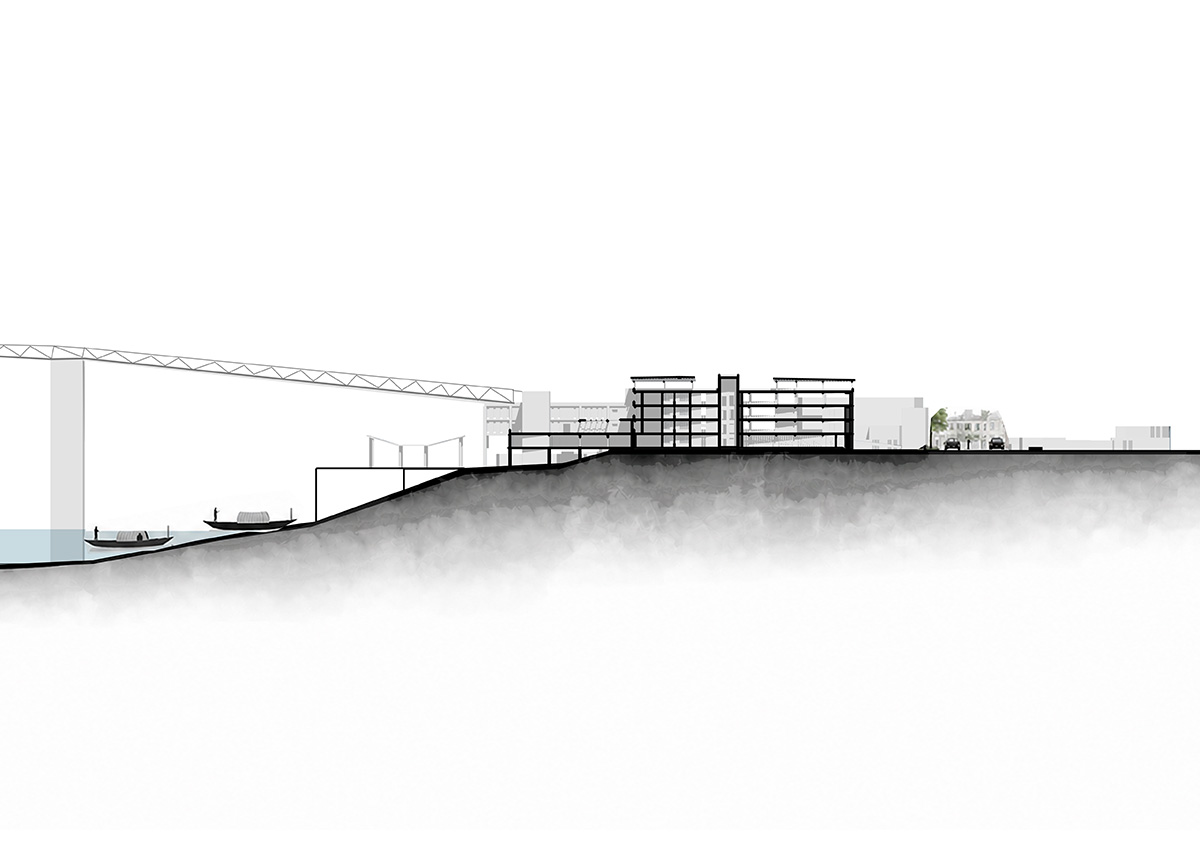
The project responds to climate vulnerability and severe seasonal flooding along the South Surma riverbank in Sylhet, Bangladesh. Rather than resisting the annual floods, it proposes a dual-layered architectural framework that adapts between the dry and wet seasons.
The scheme supports the existing riverbank community, including informal workers, low-income families, and households displaced each year during the monsoon period. It transforms the informal settlement into a more resilient urban system, allowing people to remain connected to their homes, livelihoods, and social networks.
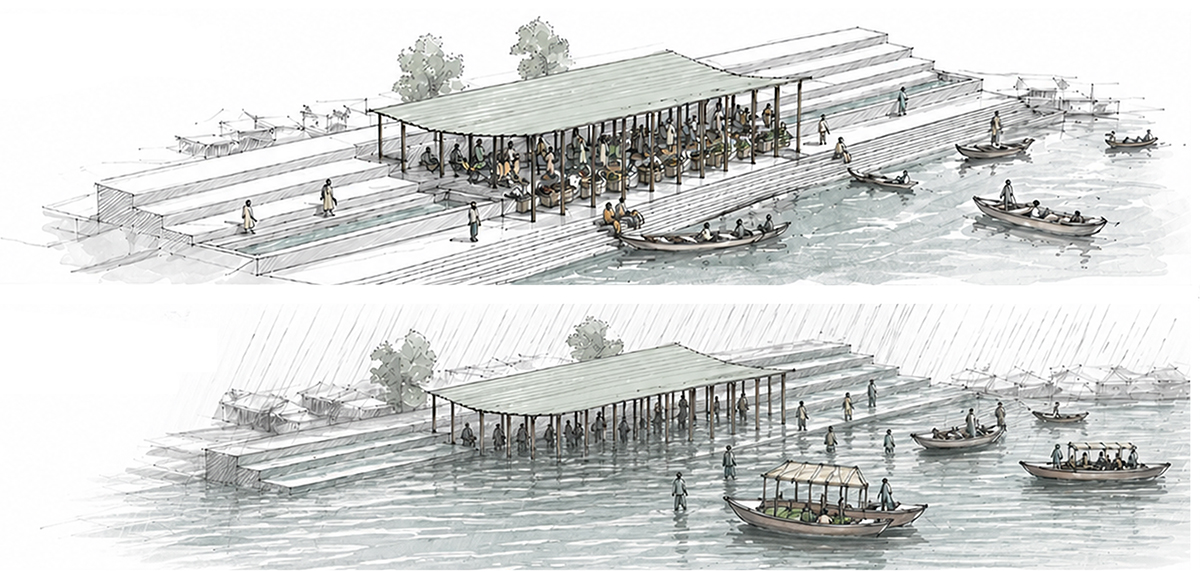
The first intervention reworks the soft, eroding river edge into a stepped, terraced marketplace. In the dry season, this becomes a vibrant platform for local trade, community gathering, and recreation. During the monsoon season, the terraces act as a passive flood defence, helping to dissipate the force of the water. As the river rises, the edge transforms into a temporary boat dock and floating market, allowing local livelihoods to continue despite flooding.
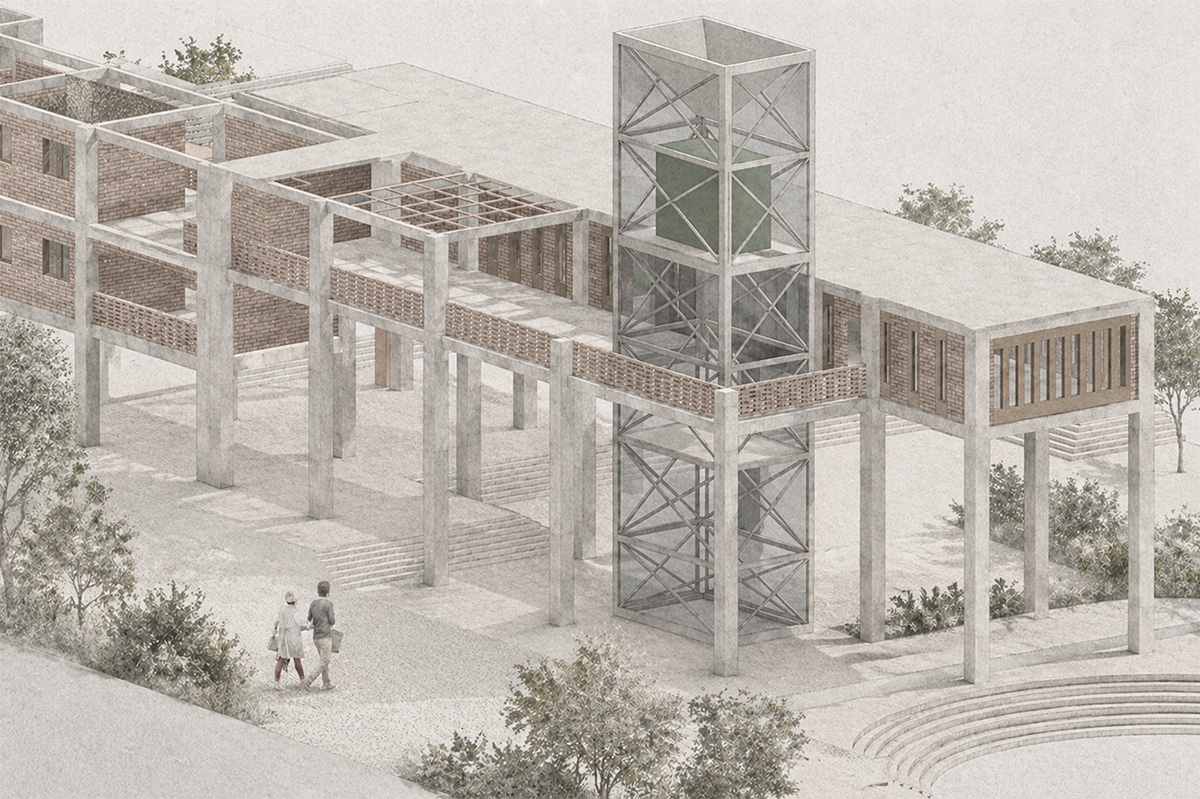
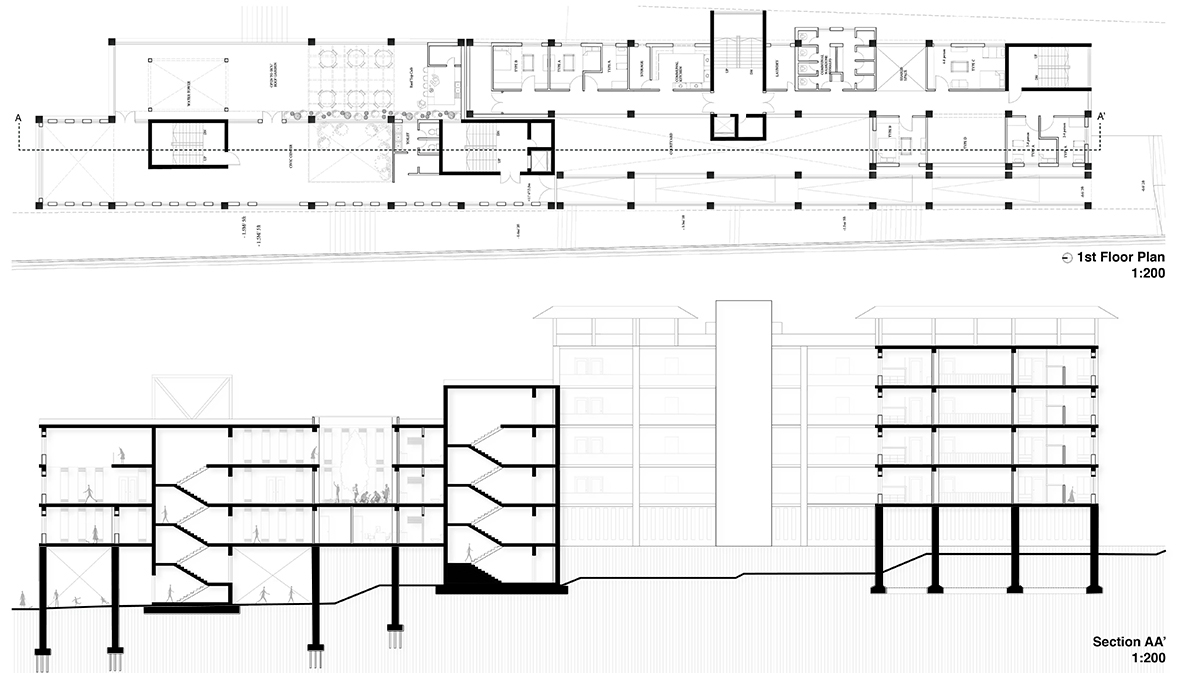
The second intervention is an elevated, flood-resilient civic spine, supported by a robust reinforced concrete frame. Raised safely above projected 2050 flood levels, this spine contains a community health hub, flexible indoor spaces for craft exhibitions, a vertical garden for year-round food production, a local “farm to shop” market, and a gravity-fed rainwater collection tower to provide clean water during disasters.
The spine also incorporates a modular framework for incremental social housing. Standardised permanent service cores are combined with lightweight, user-built infill elements made from local bamboo, tin sheets, and reclaimed bricks from the river edge. This approach respects the spatial logic of informal settlement patterns while giving residents the ability to build, maintain, and adapt their homes over time.
By combining flood adaptation, civic infrastructure, local trade, and incremental housing, the project turns a site of climate displacement into a landscape of permanence, resilience, and community security.
Connect with Anika
Email: anika.bushra84@gmail.com
LinkedIn: linkedin.com/in/anika-bushra-46a76517b